
Scottsdale treasurer warns pandemic surge is largely one‑time, urges caution as costs rise
Get AI-powered insights, summaries, and transcripts
Subscribe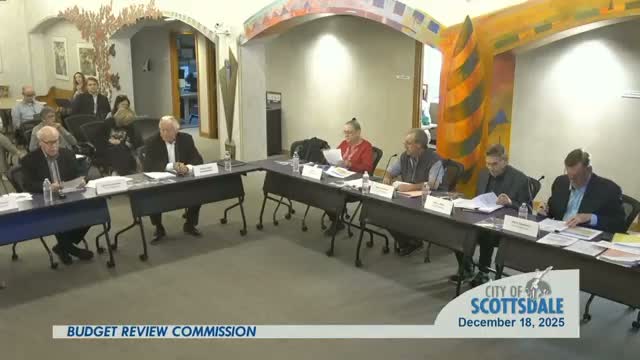
Summary
City Treasurer Sonia Andrews told the Budget Review Commission the city’s recent surplus reflects large one‑time items — federal stimulus and land‑sale proceeds — and urged maintaining reserves as inflation and wage pressures could push expenditures up in 2026 and beyond.
Scottsdale’s Budget Review Commission heard a financial‑conditions briefing Dec. 18 in which City Treasurer Sonia Andrews and Budget Director Scott Sellen said the city is in a comparatively strong position but cautioned that much of the recent surplus reflects one‑time revenues.
“We received the city received 60,000,000 in federal stimulus dollars,” Andrews said, adding the city also realized “about 70,000,000 in land sale proceeds” during the post‑pandemic period. She told commissioners those items — along with capital‑gains effects and temporary spending slowdowns early in the pandemic — created a revenue “bubble” that should not be treated as ongoing base revenue.
Andrews walked the commission through five key financial metrics used in the budget process: operating results (structural balance), cash solvency, long‑term obligations (debt and pension liabilities), capital asset reinvestment, and net position. Using historical charts back to 2007, she showed the city moved from recession‑era deficits to multi‑year reserve buildups and one‑time cash spikes in recent years.
On pensions, Andrews described reforms and actuarial adjustments to the Public Safety Personnel Retirement System (PSPRS) that produced significant unfunded liabilities in 2015 and later. She noted council authorization and quarterly payments on a $50,000,000 contribution; staff projections provided to the commission show that contribution, if all else is equal, would move the funded status in actuarial projections from roughly 72% toward an 83.6% level.
Budget Director Scott Sellen presented detailed tax‑revenue trends, showing Scottsdale’s 1% general‑fund component of sales tax and a monthly 12‑month rolling average that annualizes to about 2.5% growth through October 2025. He said category differences matter — automotive and construction categories have shown gains while food stores and restaurants are flat — and that transient‑occupancy (bed) tax receipts are more volatile and were running below budget through October.
Staff emphasized liquidity and restricted cash balances, noting enterprise funds (water, sewer, solid waste, aviation) generally operate on a cost‑recovery basis. Andrews also highlighted that a 2025 accounting estimate adjustment temporarily reduced reported enterprise expenditures by $15,000,000; she said that was an accounting change, not a cash event.
Commissioners commended the level of detail and asked for additional percentage breakdowns and scenario work. Several members pressed staff to assume conservatism in projections and to continue monitoring volatility in tourism‑driven revenues and potential legislative risks to local revenue streams.
The commission did not take legislative action on budget items at the meeting. Staff said they will provide updated five‑year projections in March and monitor trends for mid‑year adjustments if necessary.
The commission moved on to revenue detail and future agenda items at the close of the presentation.