Get Full Government Meeting Transcripts, Videos, & Alerts Forever!
Get email alerts on the Demolition topic
No spam. Unsubscribe anytime.
Port Richey council denies appeal, authorizes demolition of 8648 Green Street
Summary
After a quasi‑judicial hearing, the council denied the homeowners’ appeal and authorized demolition of 8648 Green Street, finding the building structurally unsafe and posing public‑health risks; neighbors said the property had long been neglected.
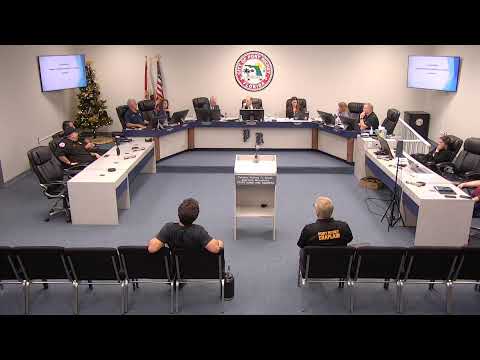
Port Richey — The Port Richey City Council voted on Nov. 25 to deny an appeal from the owners of 8648 Green Street and to proceed with demolition after a quasi‑judicial hearing in which the city’s building official presented photographic evidence of structural damage and unsafe conditions.
Property owner Joseph Voorhek and Anna Dworek, who identified themselves as residents of the address since 1979, asked the council for time to repair the house. They told council members they had installed a new metal roof, removed wet rugs and planned to hire contractors to fix the damaged area. Voorhek said he had an engineering inspection after the storm and described interior areas as habitable; Dworek said the bedrooms and bathroom were in good condition.
Tony Bryant, the city’s building official, told the council that his inspections found multiple slum‑and‑blight criteria met, including structural damage caused when a tree fell on the roof, missing soffits that create rodent‑barrier violations, cracked block and damaged lintels, and signs of past flooding and debris inside the structure. Bryant reviewed photographs included in the packet and said he believed the building was “manifestly unsafe” and posed an imminent threat to life and property.
Neighbor Brian Duke spoke during public comment in support of demolition, saying the house had been a long‑term nuisance with overgrown yards, animal and rodent activity and a persistent odor. Multiple council members said they were sympathetic to the owners’ personal circumstances but emphasized that the council’s decision must rest on evidence presented at the hearing.
Council members repeatedly noted that the owners had not submitted a contemporaneous engineering report or other evidence sufficient to rebut the building official’s findings. After deliberation, a motion to deny the appeal and move forward with demolition was made and carried on a roll‑call vote. The council stated the owners could demolish the structure themselves within 30 days; if they do not, the city will proceed under the ordinance.
The hearing followed the city’s slum‑and‑blight process; the building official said the property had been vacant since October 2024 and previously received notifications relating to the condition of the structure. The council’s decision was limited to the facts and evidence in the hearing record; the attorney reminded members that a quasi‑judicial decision must apply existing ordinance criteria to the evidence presented.
The council’s action is final for council purposes; the owners retain whatever legal options they may have under state law. The city posted the slum‑and‑blight notice earlier in August and received an appeal that led to the Nov. 25 hearing.