Get Full Government Meeting Transcripts, Videos, & Alerts Forever!
Get email alerts on the Right Of Way topic
No spam. Unsubscribe anytime.
Mesa councilors discuss returning excess ADOT right-of-way; city to maintain short asphalt segments
Summary
Council members heard a staff explanation of an ongoing process to take back excess ADOT right-of-way near freeway interchanges so the city can maintain asphalt up to concrete boundaries; staff said the transfers typically involve about 100 feet of pavement and follow the US 60 repaving work.
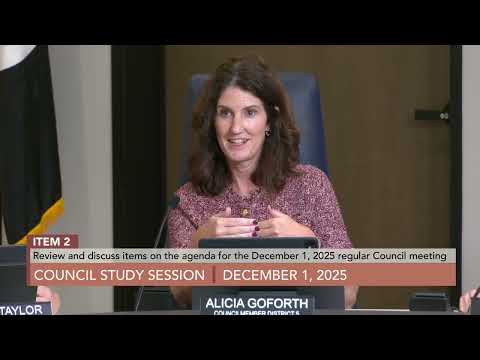
At a Dec. 1 city study session, council members reviewed a staff briefing on agreements with the Arizona Department of Transportation to accept small strips of roadway returned to city control after freeway construction.
An unidentified council member explained the rationale: “Ever since I've been at the city, we've been working with ADOT on essentially when they've built freeways, they've taken more right of way than they end up actually needing,” and the city has been “cleaning up the process.” He said the city has done “20 some odd of these with the US 60 project” when ADOT repaved and that the transfers help the city avoid leaving an unpaved gap at the edge of maintenance work.
Counseling the practical result, the same speaker said the parcels being transferred are small: “It's about a 100 feet of that, of asphalt that they're turning back over to us that we'll maintain.” He described the typical demarcation as where ADOT builds interchanges in concrete and the city’s roadways remain asphalt; the city takes asphalt up to the concrete or to the fence line of the highway, but not into the interchange itself.
Council members asked clarifying questions about specific locations mentioned in the exhibits and whether the transfers would change maintenance responsibilities near Signal View. Staff confirmed the transfers are intended to let the city complete pavement projects to the concrete boundary rather than leaving short unpaved gaps.
The briefing was informational; no formal action was taken on the right-of-way transfers during the study session. The topic was presented as routine cleanup following major ADOT projects, with staff noting past work tied to US 60 repaving. Further discussion of consent items and introductions was expected at the regular meeting upstairs.