Get Full Government Meeting Transcripts, Videos, & Alerts Forever!
Get email alerts on the Drainage Watershed Homestead Lane topic
No spam. Unsubscribe anytime.
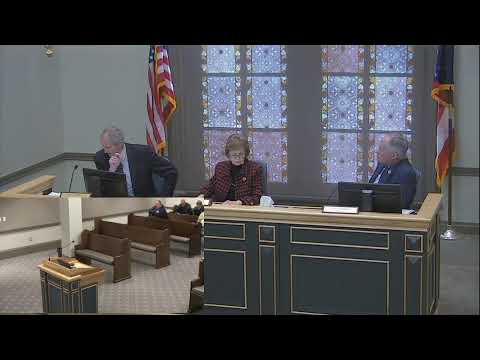
Commissioners advance Homestead Lane North drainage petition to survey and design
Summary
After a preliminary hearing with mixed testimony from landowners, the Delaware County Board of Commissioners voted unanimously to advance the Homestead Lane North Watershed drainage petition to a second hearing for survey and design; a preliminary estimate for construction was $247,500 and individual assessments were not yet calculated.
The Delaware County Board of Commissioners voted to proceed to survey and design on the Homestead Lane North Watershed drainage petition after a preliminary hearing where engineers described failing drainage infrastructure and landowners raised cost and scope concerns.
At the hearing, Brett Bacon, deputy administrator of the Soil and Water Conservation District, read the first‑hearing report on the petition filed July 1, 2025, by David A. Wolf. Bacon said the watershed lacks a comprehensive stormwater system; the recommended work would install storm sewer, drainage structures and relocated utilities. He presented a preliminary construction estimate of $195,000 plus $22,500 for administration and engineering, a $10,000 first‑year maintenance estimate, and a $20,000 contingency, for a total current‑value estimate of $247,500. Bacon emphasized the figures are preliminary and based on a worst‑case alignment that will be refined in design.
Petition originator David A. Wolf testified he and neighbors have repeatedly repaired an aging clay tile system that now clogs and "plugs up every year and a half to two years," causing ponding and yard damage. "It plugs up every year and a half to two years," Wolf said, describing jetting attempts and outfalls the neighborhood can no longer locate. Resident Jim Braun said his lot sits on an "ancient septic system field" and questioned whether the proposed improvements would benefit his property or future development; he also raised affordability concerns for retirees on fixed incomes.
Bacon and engineers told the board no detailed engineering had been completed and individual parcel assessments will be calculated only if the petition advances. Bacon said: "If we were to determine, as part of a final design, that a property is not draining into the improvement, they would simply be removed as a benefiting property." He also noted that special assessments may be spread over a maximum 15‑year period and annual maintenance assessments are generally 2–5% of the construction assessment.
Following board discussion that echoed concerns about cost uncertainty and the need for detailed survey work, the commissioners moved to proceed to survey and design (Resolution 25‑1063). The motion passed with recorded "Aye" votes.
Next steps: if the project advances, county engineers will prepare detailed plans, specifications and a proposed schedule of assessments and return to the board for a final hearing where individual costs will be calculated and property owners may again offer testimony. The board set no final assessment figures at the preliminary hearing.
Authorities cited in the hearing include Ohio Revised Code sections governing drainage petitions and assessments (ORC sections 6131 and 6137) and the property‑owner definition referenced under ORC section 6134.01.
Clarifying details: the petition was signed by six individuals representing eight of the 19 parcels in the watershed; the commissioners conducted a viewing by drone on Oct. 13, 2025; the presented project footprint would extend roughly 1,800 feet upstream from SR‑37 West, beginning about 100 feet west of Homestead Lane; the cost estimate is preliminary and described by staff as a worst‑case scenario. The hearing was the preliminary (first) hearing; a second (final) hearing will follow if the board elects to proceed with plans and assessments.