Michigan committee hears $15 million request to build 'contested-logistics' training center and mobile medical units
Loading...
Summary
Presenters told the House Committee on Homeland Security and Foreign Influence that a one-time $15 million state contribution would add infrastructure at Camp Grayling, Alpena and Selfridge for a contested-logistics training center and buy deployable medical hospital trailers; members pressed for economic estimates and federal funding certainty.
At a meeting of the House Committee on Homeland Security and Foreign Influence, presenters from the Michigan Research Institute and PM Partners outlined a plan to establish a contested-logistics training center centered at Camp Grayling and requested a one-time $15,000,000 state contribution to add infrastructure and purchase mobile medical units.
"Contested logistics is basically what Amazon does for you every day," retired Lt. Col. George Patton said during the briefing, explaining the term as efforts by adversaries to disrupt the delivery of fuel, food, ammunition and equipment to forces in the field. Jim Richter, president of the Michigan Research Institute, described a three-phase effort already underway that the presenters said would accelerate training, experimentation and insertion of sustainment technologies into military operations.
Presenters said the state contribution would pay primarily for infrastructure at Grayling and Alpena and for mobile emergency medical trailers to be based at Selfridge. "The second piece, which is what we are asking the state for right now, is a one-time-only contribution to this is $15,000,000," Richter said. They added that research-and-development funding for later phases would come from federal sources and federal sustainment or MILCON (military construction) processes, which can be lengthy.
Camp Grayling, speakers said, offers a combination of landmass, water and air training areas and four-season conditions that make it suitable for contested-logistics exercises not easily replicated in other states. Presenters pointed to recent demonstrations at Northern Strike and a prototype "translator" technology that uses transponders to show who has what equipment and where, which they said addresses data interoperability problems between disparate military systems.
The proposal also included deployable medical trailers described as 54-foot, slide-out units that provide roughly 1,000 square feet of hospital-grade space, with operating rooms, intensive-care wards, laboratories, pharmacies and telemedicine wiring. Presenters said the Army Corps of Engineers has reviewed the units and that FEMA reimbursement pathways exist. They said roughly $10,000,000 would cover building the first three medical units and that local manufacturing and outfitting could drive down costs over time.
Committee members asked for more detail on economic impact and funding certainty. Representative Conlon said the package "sounds like a lot of bang for your money" but asked whether $15 million is large enough; Richter and Patton said the presenters have received favorable reception from appropriations leaders and that a federal line in the '26 appropriations bill could support later phases, but they acknowledged federal funding is not guaranteed.
Members also questioned coordination with existing military schools and bases. Presenters said they have engaged relevant Guard offices and invited additional coordination but emphasized they are moving to field capabilities now rather than wait for formal definitions from the Pentagon. The presenters described drones, additive manufacturing and AI-enabled maintenance prediction as near-term elements of the training and technology package.
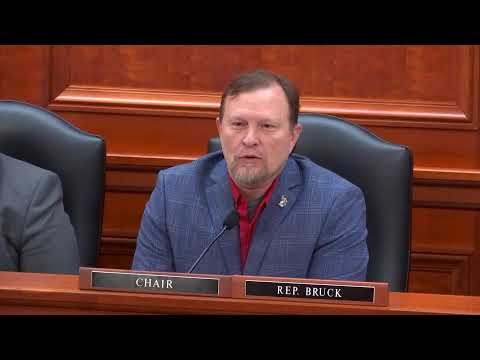
No committee vote was taken on the funding request. Chair Ruff said materials and slides would be posted to the committee website, presenters invited members to demonstrations at Northern Strike next August, and the committee adjourned.
The committee record shows only a procedural motion approving the Nov. 12 minutes during this session; the $15 million request was presented and questioned but not formally acted on.