
Committee takes testimony on tax-exemption bills aimed at attracting large ag processors; witnesses back lowering threshold
Get AI-powered insights, summaries, and transcripts
Subscribe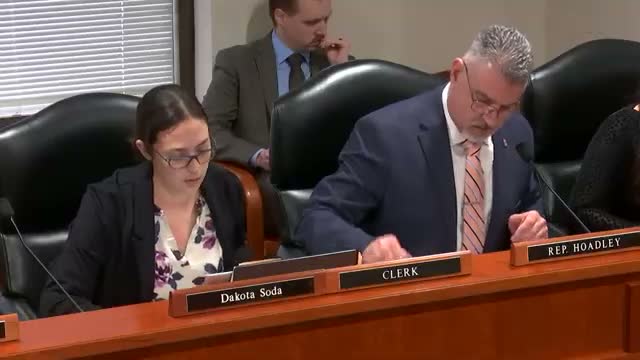
Summary
House bills 5168 and 5169 would exempt large agricultural processing projects from sales and use taxes if investments exceed $100 million; sponsors and industry witnesses urged lowering the threshold to $50 million, while municipal groups signaled opposition to aspects of HB5169.
The House Committee on Economic Competitiveness heard extended testimony on House Bills 5168 and 5169, a bipartisan package that would exempt large agricultural processing investments from sales and use taxes.
Sponsors Representative Meerman and Representative Snyder told the committee the bills target transformational projects — construction, infrastructure improvements, or retooling of agricultural processing facilities — and initially set an investment threshold of $100 million. Snyder said a substitute was being drafted to reduce that threshold to $50 million. The sponsors argued the exemption would be a targeted incentive: "The estimated impact would be 6% of the total cost. So that's a tax savings of approximately $6,000,000 per 100,000,000 of investment," Snyder said.
Multiple economic development and industry witnesses supported the bills. Jennifer Owens of Lakeshore Advantage said Michigan's food-processing sector contributes "$104,000,000,000 annually to the state's economy, supporting 805,000 jobs," and argued the state has lost major expansions to other states because it lacked competitive incentives. Michigan Milk Producers Association representatives Sheila Burkhardt and Joe Diglio urged the committee to consider lowering the qualifying threshold to $50 million and to allow companies to bundle multiple projects into a single program of investments. Scott Koren of Dairy Farmers of America also recommended lowering the threshold and emphasized infrastructure constraints — water, wastewater, roads, electric and natural gas — as crucial determinants of site selection.
Committee members asked whether the measures would help retention versus attraction and pressed for fiscal impact analysis. Sponsors and witnesses said Treasury figures were not available in committee and that impacts are difficult to quantify prospectively. Representative Bridal, Representative Altman and others raised concerns that a high investment threshold favors large processors and may not aid small livestock processors or small dairy farms; witnesses countered that expanded local processing can raise farmgate prices and create local jobs.
Submitted witness cards showed broad industry support (Michigan Agribusiness Association, Michigan Farm Bureau, Michigan Dairy Foods Association, Michigan Soybean Association, Michigan Sugar Company, county and regional economic development groups) and recorded opposition to HB5169 from the Michigan Municipal League and Michigan Townships Association. The committee received no fiscal note during the hearing and did not take a committee vote on HB5168/5169 during this session.