Vigo County seeks opioid-settlement funds to add three case managers for mental health court
Loading...
Summary
County presenters asked commissioners to support an amended request to use opioid-settlement money to fund three case managers for the Vigo County Mental Health Treatment Court, citing more than 320 client contacts by existing staff and urging coordination with the City of Terre Haute and the county council.
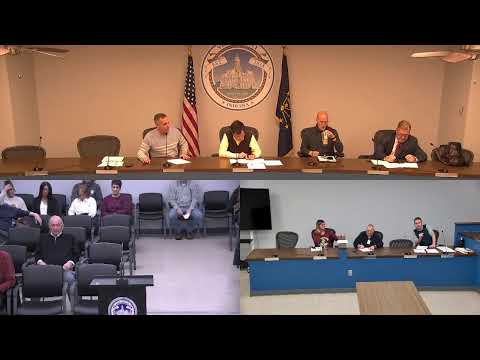
An adviser to the Vigo County courts asked the Board of Commissioners on Dec. 23 to back an amended request to use opioid-settlement funds to pay for three case managers for the county mental health treatment court.
"We're asking that you approve 3 of those case managers from the opioid settlement funds," the presenter (Speaker 7) told the commissioners, describing one of the positions as dedicated to the adult mental health treatment court and the other two continuing existing work begun in 2024. The presenter said case manager Dasha Donald had provided documentation showing she had engaged with at least 320 people in a year to help with transport, evaluations, Medicaid enrollment and other services.
The request was framed as a gap-filling measure after Healthy Indiana Funds supported similar work in 2024. Commissioner (Speaker 4) said that the state had cut the HIF program by about 73 percent, creating urgency for new revenue sources.
Commissioner (Speaker 3) asked what the commissioners were being asked to do and whether the county had approached the City of Terre Haute to seek partnership. "Knowing that the county gets $2,700,000 over 18 years and knowing that the City Of Terre Haute gets $3,400,000," Speaker 3 said, he would like to see the city partner on funding since some caseloads cross jurisdictions.
County officials and presenters emphasized that formal appropriation authority for opioid-settlement funds rests with the Vigo County Council, not the commissioners, and said the commissionersvote would be an expression of support. Presenters and commissioners agreed to explore city collaboration and to return with a recommendation at the commissioners' next meeting; the transcript records follow-up scheduling with a county meeting planned for Dec. 23 and a special-call council session later in the month.
The request did not include a draft appropriation ordinance in the commissioners' materials; presenters said they would pursue coordination with the council and the city before final appropriation steps.
The board did not take a binding appropriation at the meeting; commissioners indicated willingness to support a formal request to the county council and to seek short-term continuity funding while the city and council consider participation.