
East Ridge Council schedules Jan. 15 follow-up after lengthy debate over mobile food vending rules
Get AI-powered insights, summaries, and transcripts
Sign Up Free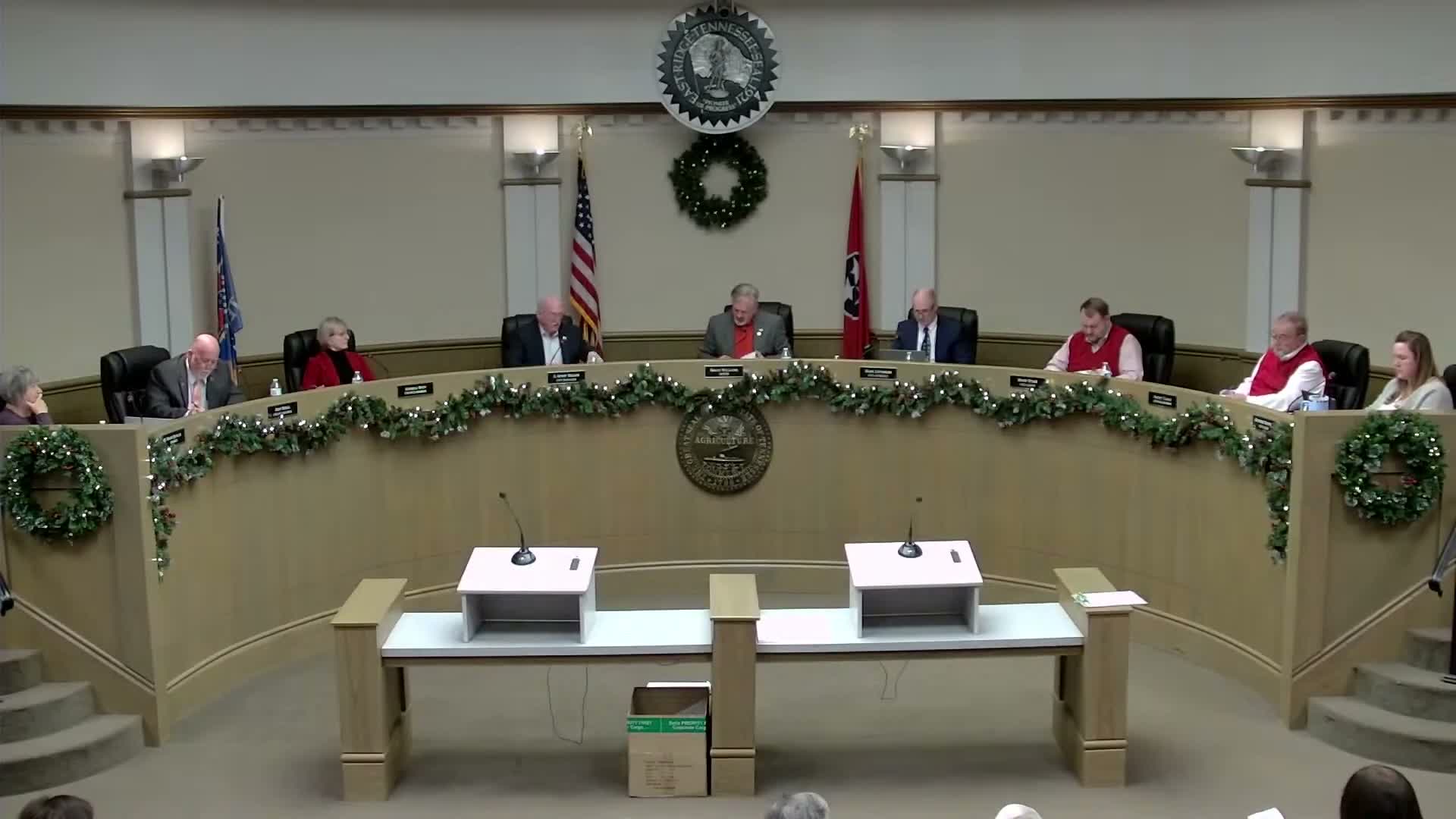
Summary
City staff presented a draft mobile food vending ordinance and council members spent nearly an hour raising concerns — from permanent staging on private property and required restroom standards to spacing and design rules — and agreed to a special called meeting Jan. 15 at 6 p.m. for further review.
City staff presented a draft ordinance to regulate mobile food vending and the East Ridge City Council set a special called meeting for 6 p.m. on Jan. 15 to continue work after a lengthy review of safety, siting and aesthetic issues.
The draft was introduced to the council as a final version for consideration and possible referral to the Planning Commission. Staff noted the ordinance would allow the permanent use of mobile food vehicles on privately owned property under certain conditions and suggested limiting permanent staging to designated overlay districts to manage compatibility along Ringgold Road. “The draft ordinance for the mobile food ordinance is presented to the this evening at the city council for consideration,” a staff presenter said when introducing the proposal.
Council members and staff raised a series of technical and policy concerns that prompted the decision to pause and return with more detail. City Manager Miller noted that a provision allowing permanent staging along the full length of Ringgold Road could permit multiple permanently sited vendors under the ordinance’s 200-foot minimum-separation rule and urged use of additional overlay districts to retain local control. “That provision can conceivably result in the location of mobile food trucks along the full length of Ringgold Road,” Miller said, noting the corridor extends roughly 4.5 miles to the county line.
Public-safety and operational items were discussed in detail. Councilmembers and staff flagged exterior appearance standards (how trucks would meet architectural guidelines if permanently staged), the ordinance’s language on permanent versus special-event vending (a ‘‘special’’ event was discussed as a up-to-three-day permit), and restroom access. Staff pointed to code section 911-0712, which requires provision of ‘‘flushable restroom facilities,’’ as the operative standard for restroom access. Fire and safety spacing also changed in response to concerns: the fire marshal asked that minimum clearances be set at 10 feet rather than the 5 feet listed in an earlier draft; staff said the ordinance would be subject to fire-marshall inspection under Section 11.c.
Councilmembers also asked staff to clarify whether the rules would allow temporary weekend vendors and how seating and canopies would be handled in storms. Several members recommended a workshop or special meeting with planning commissioners present so the body and staff could refine draft language before returning it as a formal ordinance.
Next steps: staff will circulate the draft to Planning Commission members in advance of a special called meeting scheduled for Jan. 15 at 6:00 p.m., where the council expects to continue discussion and vote whether to forward the ordinance to the Planning Commission.