Budget panel approves opioid-settlement funds to keep two court case managers
Loading...
Summary
Vigo County budget committee approved using opioid-settlement funds to hire two case managers — one for the mental health treatment court and one RISE case manager — to maintain outreach, transportation and treatment-referral work that county judges said reduces jail stays.
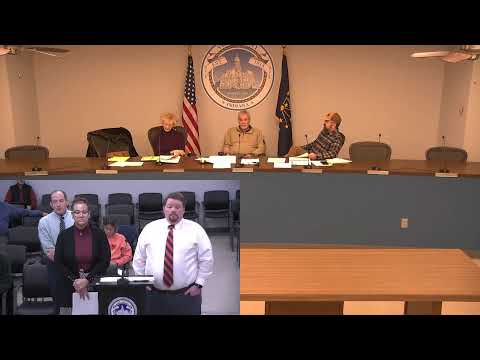
Vigo County’s budget committee voted to use opioid-settlement funds to retain two case managers who work with people in the county jail and court system, members said at the Dec. 2 meeting.
Charles Johnson, identifying himself as from the Cook County Superior Court, Division 1, and joined in remarks by Judge Kelly, asked the committee to cover one case manager for the mental health treatment court and one RISE case manager after grant funding through Healthy Indiana was cut and is scheduled to end Jan. 1, 2026. “These programs are directly targeting individuals that are in need of assistance that are covered by what the opioid settlement funds were requested to be used for,” Johnson said.
RISE case manager Dasha Donald told the committee the program has high-touch contact with people who have co-occurring substance use and severe mental illness. “Since 02/06/2024, we have engaged 320 individuals within the jails and the court system here in Vigo County,” Donald said. She listed results the program attributes to its work: permanent supportive housing placements, entries to substance-use treatment, transportation assistance and help obtaining identification and benefits.
Committee members pressed for cost details and disaggregated funding balances. Finance staff reported the restricted opioid fund balance at about $1,020,966.32 and unrestricted funds near $218,712.42 as of the meeting. Committee members noted Healthy Indiana funding had been cut by roughly 73 percent and asked whether the opioid funds could sustain ongoing staffing. Johnson offered salary estimates for the requested positions — roughly $53,000 and $50,000 plus FICA and insurance for the two roles — and said a modest mileage reimbursement would cover the travel the case managers do to transport clients.
Members also raised safety and liability questions about transporting clients. County counsel and program staff said existing policies limit transporting people judged to be high risk, recommend bringing another staff member or requesting law-enforcement accompaniment when necessary, and that workers’ compensation typically covers on-duty injuries.
After discussion, a committee member moved to approve the request; the motion was seconded and carried on an affirmative voice vote. Committee members cautioned that the program’s future could still be jeopardized by subsequent budget cuts and said they want to monitor sustainability as settlement receipts fluctuate.
The committee did not specify an exact duration for county-funded staffing in the motion; Johnson said judges and program leaders will return to the committee for updates at the next meeting.
The budget committee meeting included other items; the committee later approved unrelated personnel and pay-grade actions.