
Santa Clara council approves Central Park entrance and parking project, approving roughly $5.6 million award and related amendments
Get AI-powered insights, summaries, and transcripts
Subscribe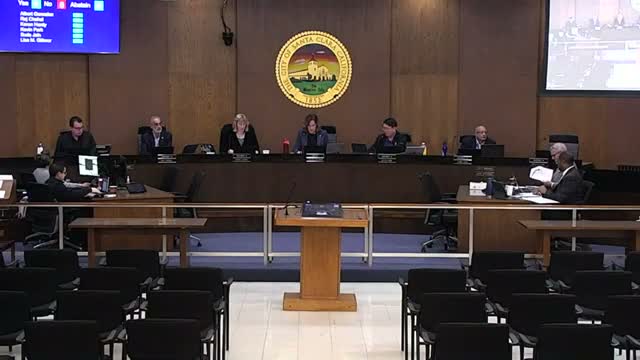
Summary
The council approved a two‑phase Central Park access and parking project that adds about 31 stalls, a signalized entrance at Kiley/Kaiser and accessibility upgrades; staff said the $5.6 million low bid and $355,300 in budget amendments will fund EV chargers and design amendments. The vote was 5–1.
Santa Clara’s City Council on the special meeting agenda approved a contract and related budget amendments to build a new signalized entrance and expand parking at Central Park, a project staff said will improve accessibility and add an estimated 31 parking stalls.
City Manager Jovan Grogan introduced the project and said staff incorporated pavilion parking improvements into the larger access project to comply with an ADA‑related settlement. “The project will construct a new signalized entrance to Central Park from Kiley Boulevard and Kaiser Drive, as well as expanded parking areas and accessible drop off area, improved pathways, and pavement rehabilitation,” Grogan said.
Public Works Director Craig Moback described the two‑phase approach: phase 1 focuses on pavilion parking lot rehabilitation, ADA upgrades, lighting and walkways; phase 2 builds a new leg of the signal and the new entrance and parking area off Kaiser Drive. Moback said the design produced roughly 31 new parking stalls, electric vehicle charging, new landscaping and accessible walkways to the Magical Bridge and the Veterans Memorial. “We’ll have about 31 new parking stalls,” Moback said.
Staff reported about 10 bids were received; the engineer’s estimate was $6.7 million and the lowest responsive bid was about $5.6 million. Staff asked council to: (1) find the project exempt under CEQA, (2) award the contract to the lowest responsive, responsible bidder, (3) authorize the city manager to execute the award documents, (4) allow change orders up to about $850,000, (5) approve an amendment with Nuvius Landscape Architecture Inc. for roughly $63,000, and (6) adopt budget amendments recognizing about $335,000 from the Silicon Valley Power greenhouse‑gas fund for EV charging plus other minor transfers, totaling $355,300.
Council members pressed staff on specific impacts: where new parking would be sited, how much parkland and which trees would be removed, whether memorials or exercise equipment would be relocated, and how the phasing would affect large community events such as the Art & Wine Festival and Fourth of July celebrations. Parks and Recreation Director Damon Sparacino noted staff is evaluating staging and alternative sites and said the city will return early next year with a scope, budget and logistics plan for hosting a July 4 celebration if Central Park is selected. Moback said the plans identify tree removals and include replanting in the construction documents; he also said bike racks could be considered although solar can’t be accommodated within the current contract.
Councilmember concerns about loss of green space and memorial impacts were raised in public questioning and during deliberations. Councilmember Park said she was concerned about removing parkland and moving memorials and exercise equipment; Moback said some items will be relocated but others are not impacted by the current scope.
Councilmember Gonzales moved to approve the staff recommendation and Councilmember Chahal seconded. The motion passed 5–1.
The project schedule presented to the council anticipates construction beginning in early 2026 and extending into 2027, with phase 1 timed to limit access interruptions to the Magical Bridge playground and to allow the city to deliver the pavilion parking improvements tied to the settlement agreement more quickly. Staff emphasized phasing and schedule are subject to weather and procurement lead times and that phase completion dates are nonbinding estimates. The council directed staff to return with any additional details needed for event planning and construction staging.