
PEP board approves plan‑design changes to slow migration and save millions
Get AI-powered insights, summaries, and transcripts
Subscribe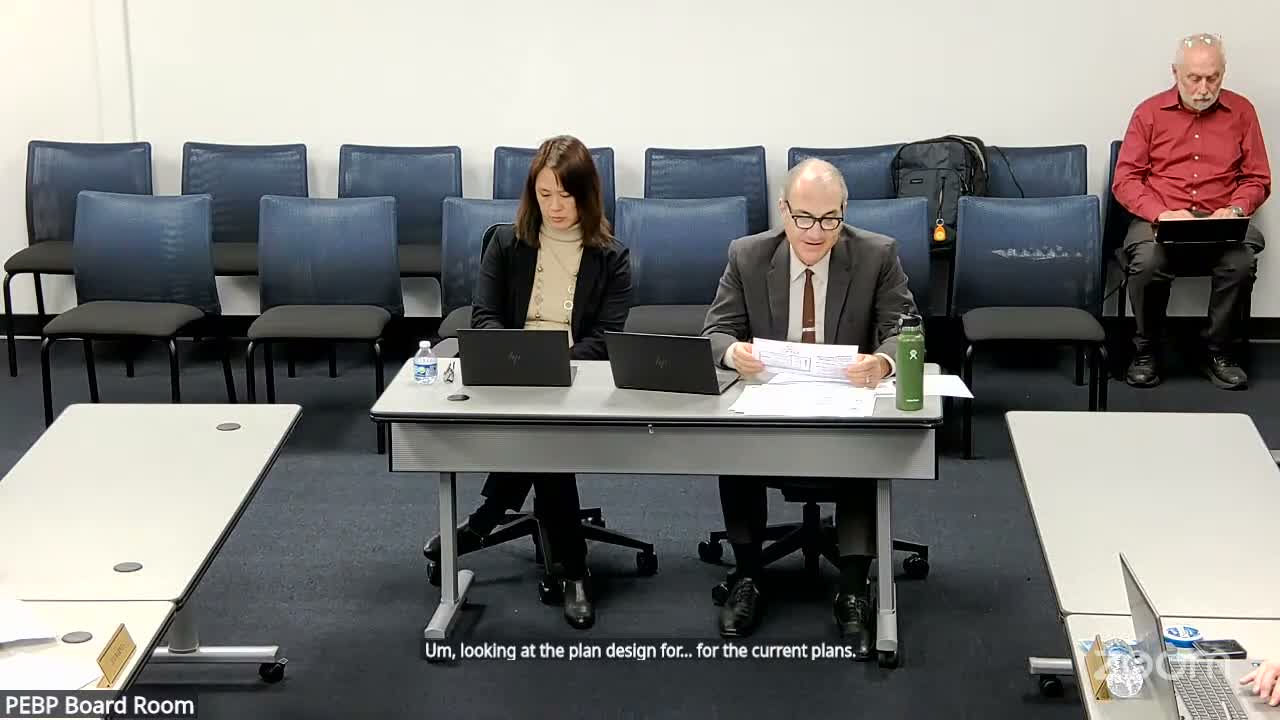
Summary
The Public Employees Benefits Program board approved a package of plan‑design changes (Scenario 1, with an amended out‑of‑pocket maximum alignment) intended to reduce migration into the low‑deductible PPO and produce multi‑million‑dollar savings. The motion passed after a friendly amendment; one member voted no.
The Public Employees Benefits Program board on Dec. 12 approved a set of plan‑design changes intended to rebalance benefits across the three main plans and slow the mass movement of higher‑need members into the low‑deductible PPO.
The board approved “Scenario 1” — which introduces a deductible for the low‑deductible PPO and realigns out‑of‑pocket maximums so the CDHP and the low‑deductible PPO share the same in‑network exposure — after a friendly amendment to set the CDHP out‑of‑pocket maximum equal to the LDPPO level. Jennifer McClendon moved the final, amended motion; Wayne Harper seconded it. The motion carried; board member Janelle Woodward recorded a dissent.
Why it matters: Siegel Consulting estimated the scenario will meaningfully improve the program’s finances. "Making those plan design changes in scenario 1, it's about a $6,000,000 savings," consultant Richard Ward told the board. The changes are meant to reduce selection pressure that has left the PPO underfunded while making plan choices actuarially clearer for members.
What changed: The board approved the specific scenario that (a) adds a deductible feature to the low‑deductible PPO, (b) adjusts maximum out‑of‑pocket relationships to restore a consistent progression from leaner to richer plans, and (c) keeps the EPO design intact while narrowing the actuarial value gap among plans. The final motion also aligned single/family and network/nonnetwork relationships so the two plans’ maximum exposures match.
Concerns raised: Several members warned the changes could raise near‑term out‑of‑pocket exposure for lower‑income employees. Board member Janelle Woodward said the tradeoffs may make the CDHP less affordable for lower‑wage workers, noting that even small out‑of‑pocket changes can influence plan choice among employees with limited disposable income. Staff and consultants emphasized that any changes to HSA/HRA employer contributions would affect actuarial value and must be modeled; the board asked staff to return with contribution options and premium scenarios in January so the rate‑setting process in March can incorporate them.
Next steps: Staff will finalize premium modeling and the impact of possible HSA/HRA seed contributions; the board directed staff to prepare materials for the January/February schedule so employee premium shares and communication can be set before March rate decisions.