Get Full Government Meeting Transcripts, Videos, & Alerts Forever!
Get email alerts on the Attendance topic
No spam. Unsubscribe anytime.
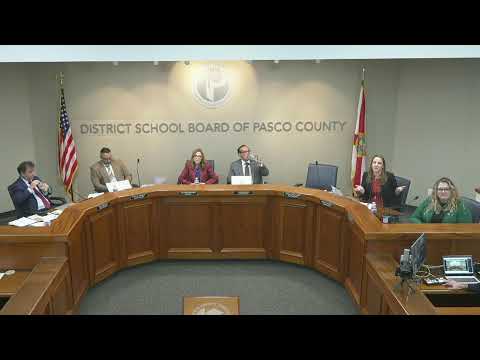
Pasco updates Attend & Achieve data; board pushes for truancy court amid strained outside partner capacity
Summary
Senior supervisor Jonathan Chasen detailed attendance outreach, statutory triggers and data showing 2,125 students at 10 unexcused absences and 1,209 at 15; district referred about 540 students to Youth Family Alternatives but reported YFA staffing shortages, prompting the superintendent and board members to pursue establishing a truancy court as an additional tool.
Jonathan Chasen, senior supervisor for student services, presented the district's Attend & Achieve update, outlining statutory attendance triggers, district interventions and recent metrics for chronic absenteeism.
Chasen defined chronic absenteeism as missing 10% of the school year (excused or unexcused) and described statutory triggers that require stepwise intervention: schools flag students at five unexcused absences in 30 days, and a 10-to-15-day window requires a formal meeting to consider referral for more intensive support. Chasen said the district expanded training (multiple sessions for student-support staff and administrators) and built documentation processes into the student information system to ensure meetings and remediation plans are recorded.
Chasen gave quarter-to-date figures: at the close of the first quarter 52 schools submitted remediation plans covering 342 students; more recent reporting showed that had been reduced to 42 schools and 88 students working through remediation plans. He said the district had 2,125 students who had reached the 10-day unexcused threshold and 1,209 students at the 15-day threshold. The district reported 3,392 completed family attendance meetings (up from 1,587 at quarter close) and said it was proactively meeting earlier when staff see triggers.
Chasen and other staff described referral pathways beyond school-based remediation. Youth Family Alternatives (YFA) is a contracted DJJ provider used to provide pseudo-case-management and intensive family engagement; the district referred about 540 students to YFA. Chasen said YFA is understaffed for Pasco's needs (the contractor expects four case managers but currently has two plus interns), which limits how many families YFA can actively serve. Chasen said the district conducts district-level staffings when families fail to engage and works with the state attorney's office on a TIP program for elementary cases (19 referrals this year, with progress in seven).
Superintendent Dr. Legg (referred to during the hearing) criticized YFA's ability to keep pace with need: "They are simply not able to do the job," he said, and urged the board to pursue a truancy court similar to neighboring Pinellas County, which processes about 35—0 students monthly. He told the board Pasco's last truancy notice was issued in 2011 and said the district needs more enforcement tools and partnership with the courts to address its most severe chronic-absence cases. Chasen and multiple board members agreed that a truancy court is an additional tool, not a silver bullet, and asked staff to continue working with community partners while pursuing court options and clearer referral capacity with YFA.
Board members raised practical questions about implementation, such as age thresholds (the district noted students under age six cannot be moved to YFA and that 16 is the age for DMV referral but the district can continue to pursue 17-year-olds while they are still enrolled), and they emphasized the importance of documenting interventions and support for families. Staff said they will continue to refine referral pathways, report back on obstacles and consider alternative vendors or court processes if YFA capacity does not improve.
The workshop concluded with board members thanking staff for the presentations and agreeing to continue pursuing options to address chronic absenteeism.