Get Full Government Meeting Transcripts, Videos, & Alerts Forever!
Get email alerts on the School Funding Distribution topic
No spam. Unsubscribe anytime.
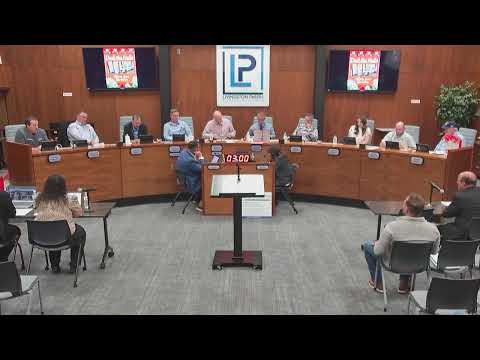
Livingston Parish School Board adopts weighted distribution formula after contentious 5–4 roll call
Summary
After extended debate, the board voted 5–4 to adopt a weighted per-pupil distribution for the 2025–26 district schedule, shifting some sales-tax revenue toward smaller schools; opponents warned the change reduces funds for districts that generate a large share of sales tax revenue.
The Livingston Parish School Board voted 5–4 to adopt a weighted per‑pupil distribution formula for the 2025–26 district distribution schedule, replacing the prior simple per‑pupil allocation.
Business Manager Ashley Amy told the board she had prepared two scenarios: “Scenario 1 shows the actual per pupil allocation as was used in 24-25. Scenario 2 shows a weighted per pupil distribution,” the presentation said, noting the weighted approach applies a larger per‑student weight to students in smaller districts.
The change prompted a prolonged debate in which opponents said the weighted formula would move money away from districts that contribute a large share of parish sales tax revenue. One board member pointed to local sales-tax contributions and objected that “we’re only getting 32% back” while contributing roughly “49% of that tax,” arguing the difference totals millions and would reduce funds available for local capital needs.
Supporters said the second sales tax is paid by many nonresidents and that the adjustment is small in percentage terms; a proponent argued the change represented “0.89% … less than 1 percent” and urged members to consider parishwide equity and current school needs.
After the substitute motion to adopt Scenario 2 (the weighted formula) was seconded, the board conducted a roll‑call vote. Mister Sharp, Mister Seals, Mister Cox, Doctor McMorris and Mister Link voted yes; Mister Frizzell, Mister Brad Harris, Mister Cecil Harris and Miss Cochran voted no. The motion carried 5–4.
Board members also discussed related funding issues, including prior Title I shifts between elementary and junior high, and the patchwork of grants and local ESSER or opioid funds that had funded safety projects such as vape detectors in some schools. Staff clarified that grants varied by school and that precise allocations were not available during the meeting.
The board did not provide a detailed, itemized estimate during the meeting of how much each district will gain or lose under the new formula; business staff said scenario worksheets were included in the assembly materials. The board’s action takes effect for the 2025–26 distribution schedule; further budget decisions will be made in subsequent budget and board sessions.