
House subcommittee grills VA and Accenture over delayed Chapter 35 payments after Digital GI Bill migration
Get AI-powered insights, summaries, and transcripts
Subscribe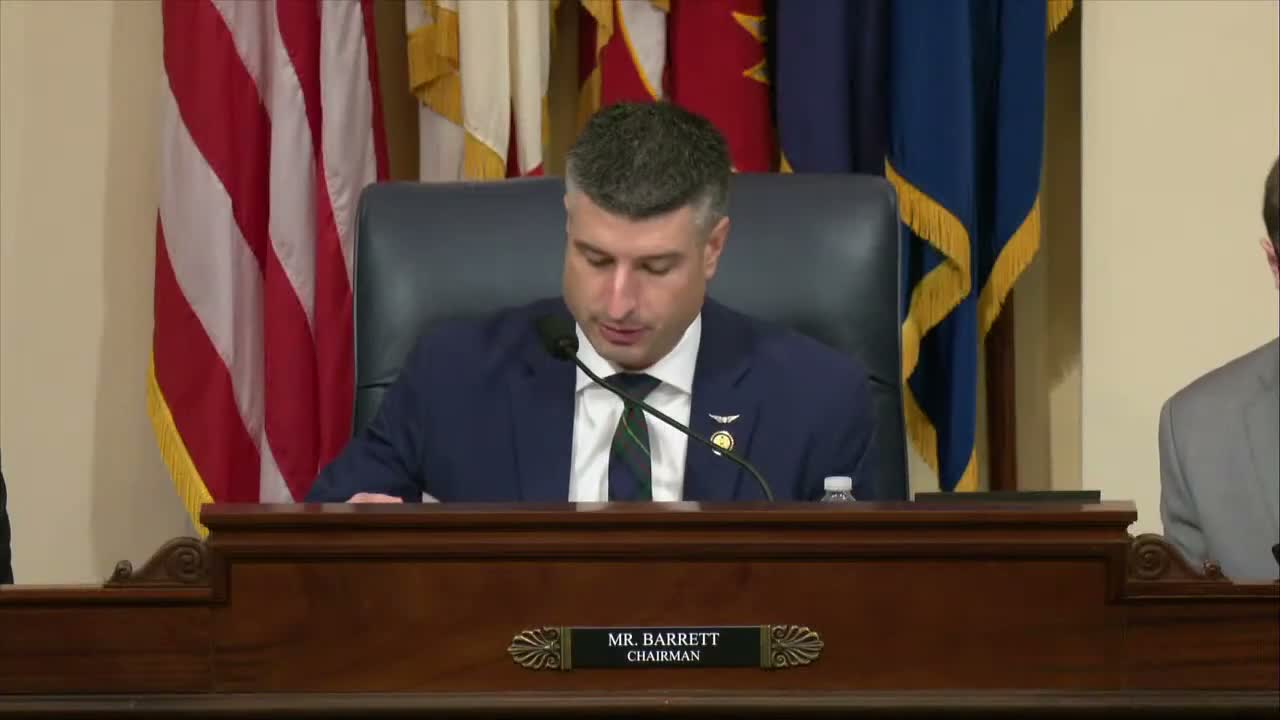
Summary
A House Veterans’ Affairs subcommittee probed why the VA’s Digital GI Bill migration and a 2024 decision to require manual reconciliation left tens of thousands of Chapter 35 beneficiaries waiting for fall-semester payments; VA officials described remediation steps and Accenture said automation deployed Nov. 15 has reconciled many claims.
Chairman Barrett convened the House Veterans’ Affairs subcommittee to examine months of delayed education payments for Chapter 35 beneficiaries after the Department of Veterans Affairs completed the migration from the legacy Benefits Delivery Network to the Digital GI Bill (DGIB).
The hearing focused on a 2024 decision to require manual reconciliation of claims converted from the BDN, which VA witnesses said dramatically increased processing time when millions of records were migrated in August 2025. Margarita Devlin, acting principal deputy under secretary for benefits at the Veterans Benefits Administration, told the panel that timing pressures to decommission the decades‑old mainframe required the August migration and compressed testing; she said the manual reconciliation was a business decision meant to reduce improper payments but “more than doubled” processing time and left Chapter 35 — dependents and survivors education assistance — disproportionately affected.
Accenture Federal Services’ program manager for DGIB, Justin Park, told the committee the DGIB platform itself was operating as designed and that two factors drove the backlog: a 19% year‑over‑year increase in unique Chapter 35 students and the 2024 requirement for one‑time manual validation of migrated mainframe data. Park said Accenture developed automation requirements on Sept. 23, completed user acceptance testing and deployed an automated reconciliation on Nov. 15, after which the company and VA reported large numbers of reconciliations completed.
Committee members pressed VA and Accenture on communications and contingency planning during the lapse in appropriations. Devlin acknowledged that contingency plans resulted in furloughs that affected some education call center staff; she said VA used existing contingency guidance and later recalled staff and implemented streamlining measures. Devlin also described mitigation steps: waiving attendance verification temporarily for Chapter 35 students, directing claims processors to trust prior entitlements where appropriate, validating automation rules, launching the automated reconciliation on Nov. 15 and accelerating overtime and staffing once appropriations returned.
Lawmakers and witness testimony presented different numeric snapshots of the problem. Committee members recited earlier estimates that roughly 75,000 beneficiaries had experienced delayed payments; TAPS — the veterans’ survivors’ nonprofit that testified in the second panel — reported a total of 168,000 fall‑semester beneficiary payments had at some point been delayed, and VA witnesses reported rapid remediation after automation: Devlin said VA had reduced outstanding Chapter 35 claims to a small number in early December and reported recent daily processing surges. The committee did not resolve the differing framings of the affected counts but documented the discrepancy on the record.
Representative Hamadeh asked Accenture how much it had been paid; Park said Accenture had been paid $686,000,000 to date for the contract work on DGIB and defended the platform’s uptime and long‑term processing gains, noting millions of claims processed and extensive automation gains for other chapters.
Members repeatedly criticized VA’s lack of timely communication to Congress, veterans service organizations and affected beneficiaries while the backlog grew and during the government shutdown, when call centers and some communications staff were furloughed. Several members pressed VA for a named approval authority or clearer internal concurrence process for releasing communications; Devlin said VA determines communications content at VBA and that departmental concurrence processes govern distribution.
The subcommittee concluded with lawmakers calling for continued oversight, a follow‑up hearing after the recess at which presidential appointees would testify, and clearer performance targets from VA for claims processing times. Chairman Barrett and ranking member Pappas said they expect further hearings and that the committee will press for clearer governance, testing and contingency rules to avoid repeating the disruption.
The committee did not take formal votes at this hearing. Members asked VA for additional documentation and briefings and signaled they will require follow‑up hearings with Senate‑confirmed officials to assign accountability and monitor remediation progress.