
Morton CUSD 709 highlights student support services: McKinney-Vento, MTSS, 504 plans and counseling demand
Get AI-powered insights, summaries, and transcripts
Subscribe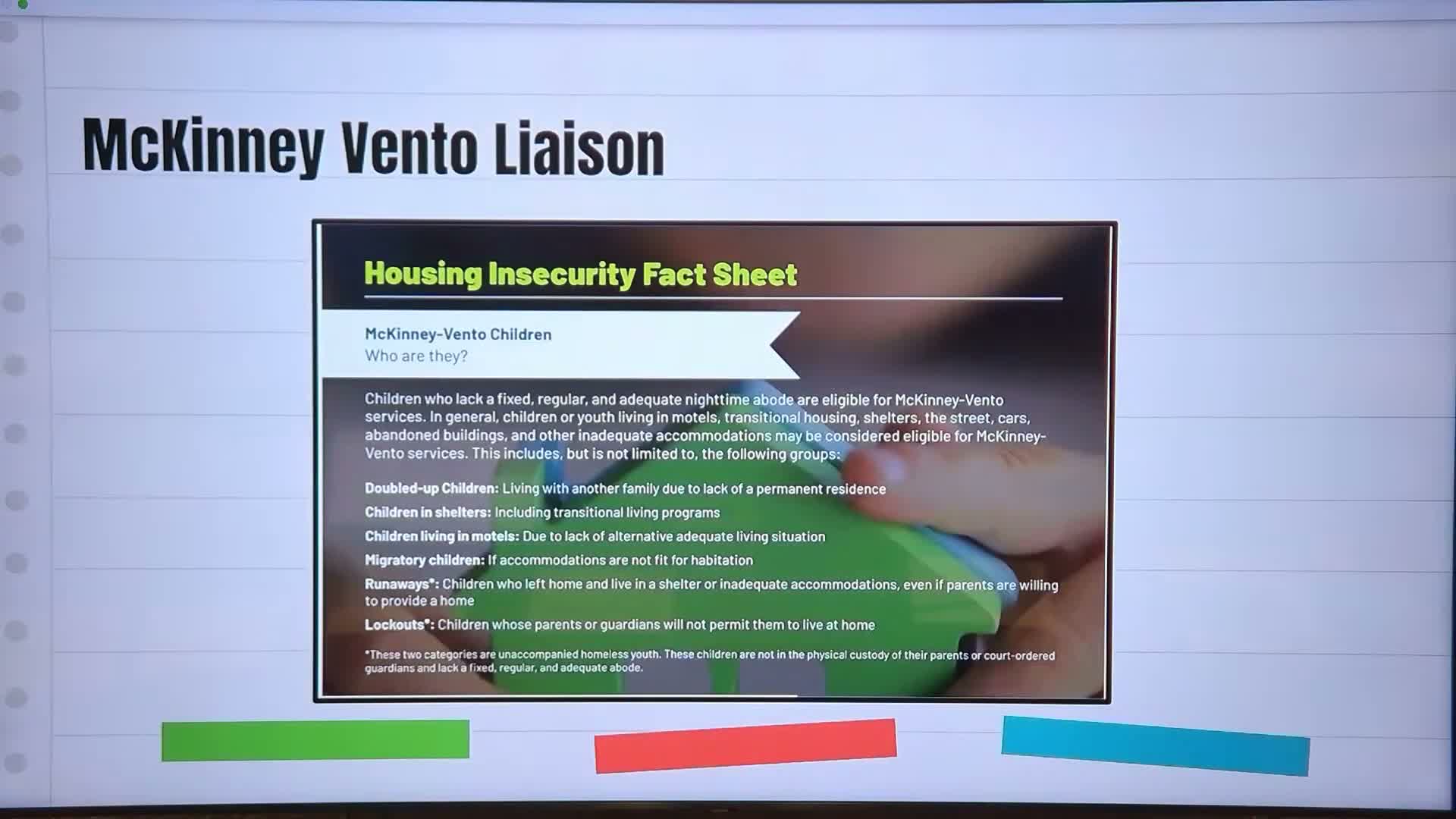
Summary
Assistant Director Stephanie Brown presented the second of four student support services briefings, reporting McKinney-Vento eligibility (29 students), MTSS and 504-plan statistics (177 total plans, 101 at the high school), counseling touch-points and staff training, and plans for staff professional development and neurosequential-model work.
Stephanie Brown, the district’s assistant director of student support services and wellness, gave the board a wide-ranging update on staff and student supports during the December meeting.
Brown described six primary responsibilities of her office and highlighted programs she said are meant to support staff capacity so students can succeed. She said the district currently has 29 students identified as eligible under McKinney-Vento (students experiencing housing insecurity) and that the district provides services ranging from transportation help to free/reduced meals and, where necessary, medical or vision assistance.
On 504 plans, Brown reported 177 students district-wide have a 504 plan, with 101 of those at the high school and the remaining 76 across the K–8 grades when combined. She said each 504 plan has a case manager: building principals at elementary schools, a counselor at the junior high, and a combination of administrators and counselors at the high school.
Counseling demand was highlighted with junior-high check-in numbers (27 seventh graders and 26 eighth graders had filled counseling request forms before Thanksgiving) and a high-school counseling figure of 1,057 student "touch points" since the school year began, with regular case loads of about 40 students per counselor. Brown also said 37 staff members have completed Youth Mental Health First Aid training.
Brown described multi-tiered systems of support (MTSS) and said the district is tracking tiered services with goals to limit the number of students requiring higher-tier interventions. She also described professional development activities the office runs and said the district uses the neurosequential model in education as a framework for understanding stress, trauma, and learning.
"When we focus on the adults, the kids will be good," Brown told the board, summarizing her team’s approach to staff and student wellness.
Board members asked clarifying questions about tiered services and the district’s follow-through; Brown said additional presentations in the series will follow in the coming months.