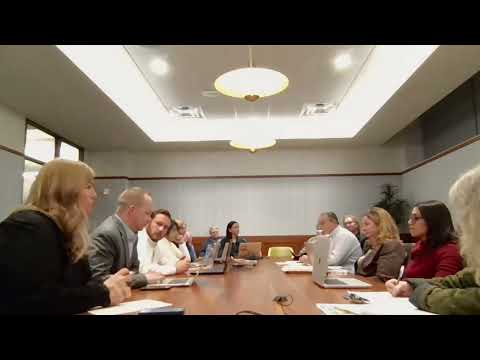
Residents press council on displacement, infrastructure and eminent domain in Meridian Corridor sub‑area plan debate
Loading...
Summary
At a Dec. 17 Land Use & Special Committees meeting, residents and council members debated a proposed US‑31/Meridian Corridor sub‑area plan; speakers raised concerns about potential loss of roughly 65 homes, affordability of proposed high‑density units, wastewater and water conveyance capacity, and the risk of eminent domain for future redevelopment.
The Snyder City Council’s Land Use & Special Committees spent the bulk of their Dec. 17 meeting reviewing a proposed sub‑area plan for the US‑31/Meridian Corridor and fielding sustained public concern about displacement, infrastructure capacity and how the plan would be used by developers.
Adrian Heeling, planning staff, briefed the committee that the sub‑area plan is a proposed amendment to the city’s comprehensive plan: it sets area character, identity and policy guidance but does not itself change zoning, alter development approvals, or allocate infrastructure funding. He told the committee that inclusion in the comprehensive plan requires a public hearing under state statute.
Residents pressed the committee on several fronts. One commenter said the plan’s appendix appears to remove roughly 65 single‑family homes in the Walter Court/Branchings area and replaces them with high‑density townhome and condominium concepts that she said would be unaffordable to long‑time residents. “These 65 family homes are not statistics…they are people, real families,” the speaker said, and challenged the committee to preserve existing housing rather than prioritizing density and revenue.
Other speakers warned of infrastructure limits. A committee member and planning staff pointed to ongoing county studies of aquifer resources and noted the need for additional conveyance piping to move water to the west side; another speaker pointed to a nearby jurisdiction’s wastewater plant that was built for a few thousand residents but now serves many times that number, calling attention to the capital cost and land required for larger treatment plants.
Residents also raised the prospect that marking an area as a redevelopment target can signal investors and, in other jurisdictions, has led to the use of eminent domain to acquire holdouts. “The big scary word that hasn't been said is eminent domain,” a commenter told the committee.
City officials and committee members stressed that the sub‑area plan does not itself change zoning and that much of the corridor's current boundaries and land‑use designations date to earlier overlay zones adopted in the 1980s and updated in 2022. Staff said the plan is intended to guide future private investment and to help the city identify where higher‑intensity redevelopment and buffering should occur — for example, focusing on vacant office parks and large parking lots along US‑31 to improve walkability and economic vitality rather than wholesale conversion of single‑family neighborhoods.
After extended discussion the committee agreed to pause deeper West Side work and resume detailed East Side review at a future meeting so staff can digest feedback. The committee did not adopt zoning changes during the meeting; any future rezone or development would proceed through separate processes and require public hearings.