Get Full Government Meeting Transcripts, Videos, & Alerts Forever!
Get email alerts on the Beekeeping Culture topic
No spam. Unsubscribe anytime.
Local beekeepers say Humboldt Countys landscape and community fuel a thriving hobby
Summary
On Free Speech with CR, two teacher-beekeepers and hosts described how Humboldt Countys floral diversity, community clubs and local training help residents start hives, produce distinct local honeys and share beekeeping knowledge.
Molly Blakemore, host of Free Speech with CR, and co-host Dr. Keith Flamer spent a radio segment with two teacher-beekeepers to explore how beekeeping has become a prominent hobby in Humboldt County.
Beekeepers on the program described the countys floral variety, local classes and a cooperative bee club as key reasons for the activitys popularity. One guest, identified on-air as a beekeeper and teacher at CR, said, "It's a fun hobby. It's rewarding," and called curiosity central to the practice. The speakers emphasized that beekeeping in the county ranges from solitary backyard hives to coordinated local efforts to collect and redistribute swarms.
Why it matters: Local honey reflects neighborhood flora and can bolster small-scale producers. Guests stressed that single-site honeys differ markedly in color and taste depending on dominant blossoms such as blackberry, oak, clover or pumpkin blossom, and described how hobbyist beekeepers support pollination for nearby farms.
The guests walked listeners through common ways to start bees: ordering a packaged colony from a supplier, accepting a surplus colony from a neighbor, or capturing a wild swarm via a local swarm list. One speaker described using coordinated pickups and the Humboldt County Beekeepers club to obtain and redistribute bees. On managing numbers, a beekeeper recounted shrinking a summer peak of roughly 13 colonies down to three through combining techniques to keep apiaries manageable.
Listeners also heard practical tips about handling honey and hive care. Guests advised warming crystallized honey gently (a dark, warm place or a warm water bath) and recommended keeping temperatures below roughly 105 degrees Fahrenheit to avoid degrading flavor or other desirable properties. On stings and health claims, one beekeeper described personal experiences with stings and referenced apitherapy anecdotes; hosts and guests noted such uses are largely anecdotal and not established medical practice.
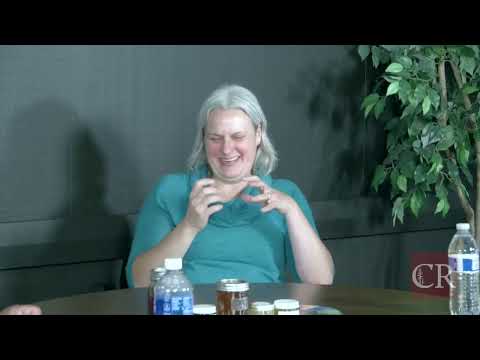
The program included a tasting demonstration and a short introduction to a honey flavor wheel from the UC Davis Pollinator Center, used to describe differences in aroma, texture and finish. Guests contrasted locally produced single-source honeys with commercially blended products and noted that much national honey production is tied to large-scale crop pollination, such as almond orchards.
The segment closed with thanks to the guests and an invitation to listeners to explore local classes and the county beekeeping community for hands-on learning. The hosts announced a short break after the demonstration.