
Caltrans presents road‑usage charge research; Humboldt commenters raise privacy, equity and tribal concerns
Get AI-powered insights, summaries, and transcripts
Subscribe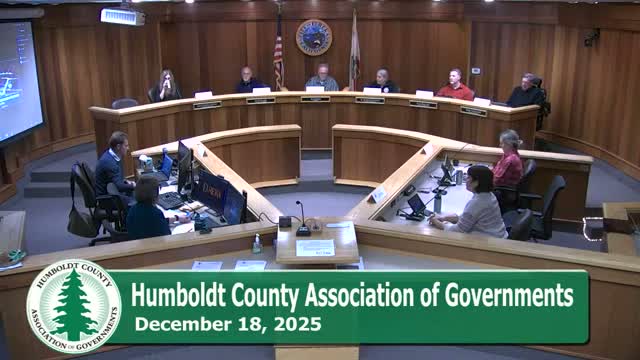
Summary
At the HCOG meeting, California Transportation Commission and Caltrans staff summarized road‑charge pilots and a 10‑year transportation needs assessment, noting a multi‑hundred‑billion‑dollar shortfall and pilot rates (SB339 pilot used 2.8¢/mile). Public commenters raised privacy, tribal sovereignty, equity and cost concerns.
California Transportation Commission staff and Caltrans presenters briefed the Humboldt County Association of Governments board on Dec. 18 about the state’s road‑usage charge research, pilot results and next steps to address projected transportation funding shortfalls.
Frances Tia Sanchez, needs‑assessment and road‑charge program manager at the California Transportation Commission, told the board the commission’s 10‑year statewide assessment identified roughly $570 billion in needs across facility categories against a baseline revenue estimate of approximately $572 billion that was adjusted to $541 billion after accounting for declining fuel consumption; she said the assessment shows a 10‑year shortfall of "just over $250 billion." She described road charges as a per‑mile fee that would shift part of the revenue base from fuel taxes to miles driven and noted the CTC’s recommendation to study a phased approach to any long‑term replacement for the gas tax.
Caltrans presenters reviewed four state pilots, including the SB 339 revenue‑collection pilot that set the pilot rate at 2.8¢ per mile for passenger vehicles and tested a range of reporting options: odometer reads, plug‑in on‑board devices, and GPS‑based reporting. Presenters emphasized tradeoffs between privacy and administrative cost: GPS reporting can reduce over‑charging for private‑road miles but raises data‑processing and storage costs; low‑tech options (odometer readings or photos) reduce data sharing but limit analytics.
The presentation also highlighted findings from a rural and tribal pilot showing participants often value privacy over potential tax savings, and that tribal leaders voiced strong sovereignty concerns and worries about impacts to tribally owned gas stations (estimated at roughly 40 statewide) that currently benefit from state‑tax exemptions.
Public commenters and board members pressed Caltrans and the CTC on equity and implementation: several commenters argued a mileage fee would disproportionately affect low‑income and rural drivers who travel farther for work; others urged exploring alternatives such as registration fees, bonds or general‑fund options. Environmental and community groups asked whether heavier vehicles or commercial trucks would pay differentiated rates to reflect pavement damage and fuel use; Caltrans said commercial vehicle structures and weight fees are already part of existing systems and that commercial rates would likely differ from passenger‑vehicle rates.
On privacy, Caltrans described multiple reporting choices designed to let users control data sharing. On governance, staff said any change to the statewide tax system would require legislative action and that tax changes would likely need a two‑thirds legislative vote and possibly a public vote if constitutional changes were required.
Board members and local agencies asked that staff continue outreach, provide town halls and analyze local impacts, especially for industries such as trucking and agriculture that the county identifies as economic backbones. Several speakers urged the board to press for local input and to use the state’s pilot findings and CTC reports to inform legislative advocacy.
Provenance: presentation and Q&A occurred during the Caltrans/CTC road‑charge update (Frances Tia Sanchez and Caltrans presenters).