
HCOG board adopts RHNA methodology (Alternative 2) after public debate on VMT and opportunity scores
Get AI-powered insights, summaries, and transcripts
Subscribe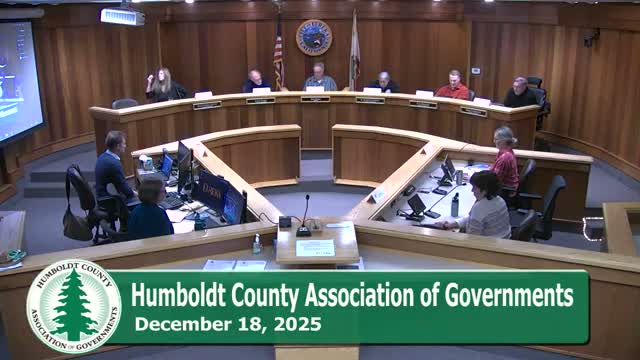
Summary
Following presentations and extended public comment, the HCOG board voted to adopt Alternative 2 for the seventh-cycle RHNA methodology, prioritizing a VMT-weighted approach for below-moderate units and initiating the 30-day notice and appeal period to HCD.
The Humboldt County Association of Governments board adopted a final Regional Housing Needs Allocation (RHNA) methodology, choosing Alternative 2 after staff presentations, public comment and board discussion on Dec. 18.
HCOG staff described three updated alternatives. Alternative 2 assigns total units in step one based 50% on jobs and 50% on population, then distributes below-moderate (low-income) units by a 30% HCD opportunity-score weighting and 70% work-based vehicle-miles-traveled (VMT) weighting. Staff explained that the total unit counts per jurisdiction remain the same across alternatives but the distribution of below-moderate units differs.
Legal Services of Northern California and the Environmental Protection Information Center told the board in written comments and at public comment that Alternative 2 best furthers fair housing and reduces VMT and sprawl by placing more low-income units where access to jobs, transit and services lowers transportation burdens. Rebecca Smith, managing attorney for Legal Services of Northern California's Redwood Regional Office, urged adoption of Alternative 2, saying VMT-weighting addresses transportation cost barriers for low-income households.
HCOG staff and the regional working group had recommended Alternative 3 as the balanced approach that most directly tracks statutory objectives, but the board debated trade-offs including HCD's previous reactions, staff time for appeals and local infrastructure constraints. Several board members said alternatives 2 and 3 were both defensible; Supervisor McDonough noted the differences were modest for many jurisdictions but that staff should present a robust case to HCD.
Supervisor [last name unidentified in transcript] moved to adopt resolution 25-25 approving Alternative 2 as the final RHNA methodology and to direct staff to provide statutory notices to member agencies and HCD; the motion was seconded and passed by voice vote. Staff said adoption triggers a 30-day review and appeal period during which jurisdictions and HCD may comment or appeal; if no appeals are filed the regional housing needs plan will be finalized and staff will return with a recommended plan in March.
Board members asked staff to continue outreach to local advisory bodies (several commenters had urged more municipal-level engagement) and to prepare materials that explain the HCD opportunity score and VMT rationale for local councils and stakeholders. The board did not change the recommended RHNA total numbers; the vote established the methodology used to allocate the units across income categories.