Get Full Government Meeting Transcripts, Videos, & Alerts Forever!
Get email alerts on the Land Use topic
No spam. Unsubscribe anytime.
Des Moines County supervisors review major revisions to wind, solar and battery siting ordinance
Summary
Supervisors heard extensive public comment and a staff-led, page-by-page review of a heavily revised siting ordinance covering wind, solar and battery projects. Key disputes centered on setbacks, height limits (650 ft cap), a proposed two-step permitting process and wildlife protections.
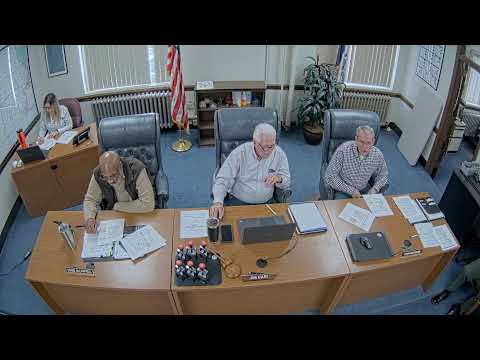
Des Moines County supervisors on Dec. 9, 2025 held a lengthy work session to review revisions to a wind/solar/battery siting ordinance after more than an hour of public comment that sharply divided residents and local energy advocates.
The meeting opened with about two dozen residents offering input. Rose Fisher, a frequent commenter, argued the draft ordinance repeatedly tilts toward developer interests, saying, “Based on my research, it is quite evident that all these decisions concerning critical issues like sound, height, setback, permitting, and wildlife have been in favor of the wind company.” Other speakers urged larger property‑line setbacks and stronger wildlife protections; supporters including Kenny Olsen of the Des Moines County Energy District praised the draft as balanced and potentially beneficial to county finances.
After public comment, planning staff presented the latest draft and explained more than 160 changes since the original May draft and subsequent attorney review. Staff said they shortened the abandonment threshold (from 365 days to 120), clarified decommissioning to cover partial removals, tightened definitions (ice throw, shadow flicker), and adjusted several thresholds: commercial solar now defined at 5 MW and commercial wind at more than 100 feet. The ordinance now defines turbine height as ground level to the tip of the blade at its highest rotation and includes a maximum height of 650 feet at the board’s request.
Setbacks and waivers were a central focus. The draft sets minimums for nonparticipating properties (either an 1,800‑foot minimum or three times turbine height, whichever is greater) and allows some waivers where a nonparticipating owner consents. Several public speakers and at least one supervisor pushed for larger setbacks tied to blade‑throw risk (several residents asked for 3x–4x height setbacks and a larger buffer for known sensitive wildlife areas).
Noise, shadow‑flicker and signal interference provisions also were revised. The draft adds standardized measurement points (outside the closest outer wall of buildings), lowers a previously proposed sound cap in drafts to a 50‑decibel weighted maximum for some installations, and requires operators to minimize electromagnetic interference and consult the National Telecommunications and Information Administration (NTIA) to confirm systems are unlikely to cause unacceptable interference.
A major policy dispute arose over permitting structure. Staff outlined a process with preliminary review and a final review. County leadership emphasized the board’s preference to avoid creating a preliminary permit that could be interpreted as a binding “consent to proceed” or a conditional‑use permit that courts might treat as a property interest. County attorneys and staff discussed keeping a single integrated permitting approach while preserving the board’s ability to impose enforceable special conditions; several supervisors suggested removing any language that would require the board to “vote to consent to proceed” to reduce legal exposure.
Environmental safeguards were expanded in response to conservation feedback. The wildlife chapter now mandates field studies and monitoring for avian and bat species when projects abut conservation areas (a 3‑mile documentation buffer), requires baseline and post‑construction soil and contamination sampling, and obliges developers to present action plans if contaminants exceed thresholds. The ordinance also requires third‑party technology risk assessments for components deemed novel or experimental and adds insurance minimums (staff discussion suggested at least $5 million in liability with a $10 million umbrella as a baseline).
Road‑use and decommissioning sections were updated to reflect transport and repair realities: developers must coordinate oversize/overweight moves with county and state authorities, notify the county on repowering or major equipment moves, and arrange for removal of damaged components within defined timeframes; staff shortened certain removal timelines for damaged equipment and required county review of cost estimates for road impacts.
Supervisors told staff to continue refining the draft language — principally to avoid creating unintended legal commitments during preliminary review while preserving the county’s ability to require protective conditions. Staff said they will incorporate feedback from county departments (health, conservation, emergency management) and return with clarified language and tracked changes.
What happens next: staff will refine the ordinance language to address the board’s concerns about permitting‑stage votes and to incorporate department comments. The board indicated further work‑session review is expected before any formal adoption vote.
Quotes used in this article are drawn verbatim from the Dec. 9, 2025 Des Moines County Board of Supervisors meeting transcript.