Get Full Government Meeting Transcripts, Videos, & Alerts Forever!
Get email alerts on the Earned Income Tax topic
No spam. Unsubscribe anytime.
Narberth council adopts ordinance to raise earned income tax to 1% to fund capital projects
Summary
Narberth Borough Council voted 6–1 at a Dec. 1 special meeting to increase the borough—s earned income tax from 0.75% to 1% to provide a dedicated revenue stream for capital improvements; the council said the change will take effect Jan. 1 and was advertised in three separate legal notices.
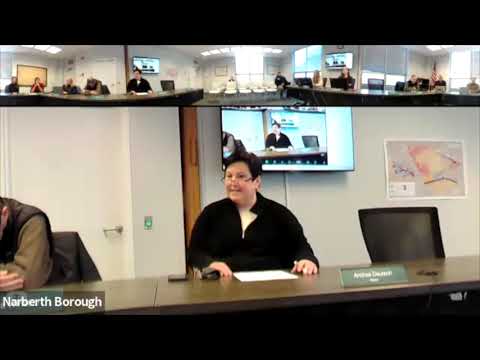
Narberth Borough Council voted 6–1 on Dec. 1 to adopt Ordinance 10 67, raising the borough—s earned income tax (EIT) from 0.75% to 1% to help pay for a slate of capital projects the council says lack a dedicated revenue source.
The special meeting was called so the rate change could meet statutory deadlines and take effect Jan. 1, the presiding officer said. "The rate change for the EIT will take effect, as of January 1," the presiding speaker said, explaining the timing is intended to avoid administrative problems and mid‑year rate inconsistencies.
Solicitor John Walco told council the borough took extra care with legal advertising. "There's actually 3 advertisements that were done," he said, describing separate notices for the intent to increase the EIT, the special‑meeting notice, and an ordinance advertisement, and adding the ordinance was submitted to the law library to comply with the Sunshine Act and advertising requirements.
Council discussion focused on the tradeoffs between revenue tools. Council member Mary Deutsch said she preferred a millage increase over an EIT raise because she believes property tax millage spreads costs differently, and said she had considered vetoing the ordinance but chose not to do so because a veto would delay implementation and complicate tax filings. "I would have much more preferred a millage increase ... Normally, if this were in the middle of the year or I would consider a veto ... but in the interest of not messing up everybody's finances ... I will not veto it," Deutsch said.
Other council members voiced both practical and equity concerns about the EIT as a flat tax on wages and noted the borough could be recapturing some income currently paid to neighboring municipalities. One council member said, after reviewing analyses, the benefits of adopting the EIT at the 1% cap outweigh those concerns and announced support.
The motion to adopt Ordinance 10 67 was moved and seconded on the floor. When the presiding officer called the vote, the ordinance passed 6–1; Council member Spear was recorded as opposed. The council said the increase is the statutory cap for many municipalities and that it should be sufficient to meet near‑term capital needs.
The council closed the meeting after the vote; the presiding officer noted there would be no executive session following the meeting. The ordinance was advertised in multiple notices and, as stated during the meeting, is slated to take effect Jan. 1. The borough did not provide additional implementation details or revenue estimates during the meeting.