Get Full Government Meeting Transcripts, Videos, & Alerts Forever!
Get email alerts on the Design Review Neighbor Dispute topic
No spam. Unsubscribe anytime.
Neighbor urges Woodside to halt work after alleged admitted code violation at adjacent lot
Summary
A neighbor told the Woodside ASRB that a nearby conceptual plan for 156 Bardette includes admitted setback and grading violations and asked the board to rescind conceptual approval and order the owner to stop work; planning staff said compliance is checked at the formal review stage and code enforcement does not apply at concept review.
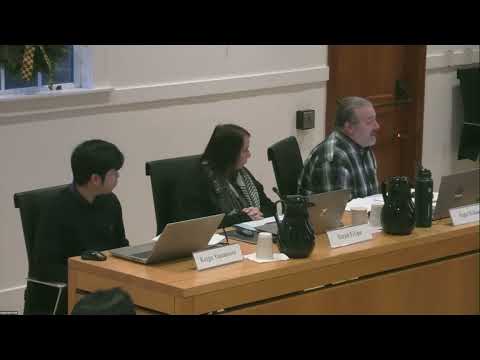
Maya Stern told the Woodside Architectural and Site Review Board on Dec. 15 that her mother, Pookie Stern, the owner of 164 Bardette, had been told by the owner of 156 Bardette that the approved conceptual design did not meet setback requirements. “They fully admitted to a code violation with a setback to our property,” Stern said, and she read a portion of an email she said contained that admission.
Stern said the conceptual plan shows side setbacks of roughly 23–25 feet where the code requires 30 feet, and that portions of the proposed house exceed 17 feet in height, which would require increased front setbacks under the residential design guidelines. She also raised concerns about a six-foot retaining wall installed on slopes steeper than 35 percent, extensive cut and grading for an accessory dwelling unit (ADU), and removal of protected trees. Stern asked the board to rescind the conceptual approval and to have the planning department order the property owner to cease work under the cited code section.
Planning Director Sage responded that conceptual design review is the first, less-detailed stage of the town’s design review process and is not a final approval that demonstrates code compliance. Sage said code enforcement under “Article 3 Section 10.4” applies to construction without permits and that the conceptual review intentionally does not require all documentation necessary to determine every code compliance item. “There’s nothing to appeal at this stage,” Sage said, adding that items such as setbacks, grading and slopes are reviewed during the formal design review and must be made zoning-compliant or addressed through exceptions or variances at that later stage.
Sage told Stern the town would notify neighbors when the project reaches formal design review; neighbors may meet with the project planner, review plans, submit comments, and pursue an appeal of any final decision. Stern and the board discussed the administrative fee associated with an appeal; Sage confirmed neighbors would be given opportunities to comment and that staff will flag zoning compliance requirements for the applicant.
The board did not take any immediate enforcement action at the meeting. Staff said the applicant will proceed to the more rigorous final design review stage where compliance will be verified and where decisions may be appealed as allowed by town rules. The ASRB encouraged the Sterns to remain in contact with staff and to participate in the formal review so concerns about setbacks, grading and protected trees can be fully evaluated.