
252nd District Court morning docket: multiple guilty pleas, bond changes and sentences
Get AI-powered insights, summaries, and transcripts
Subscribe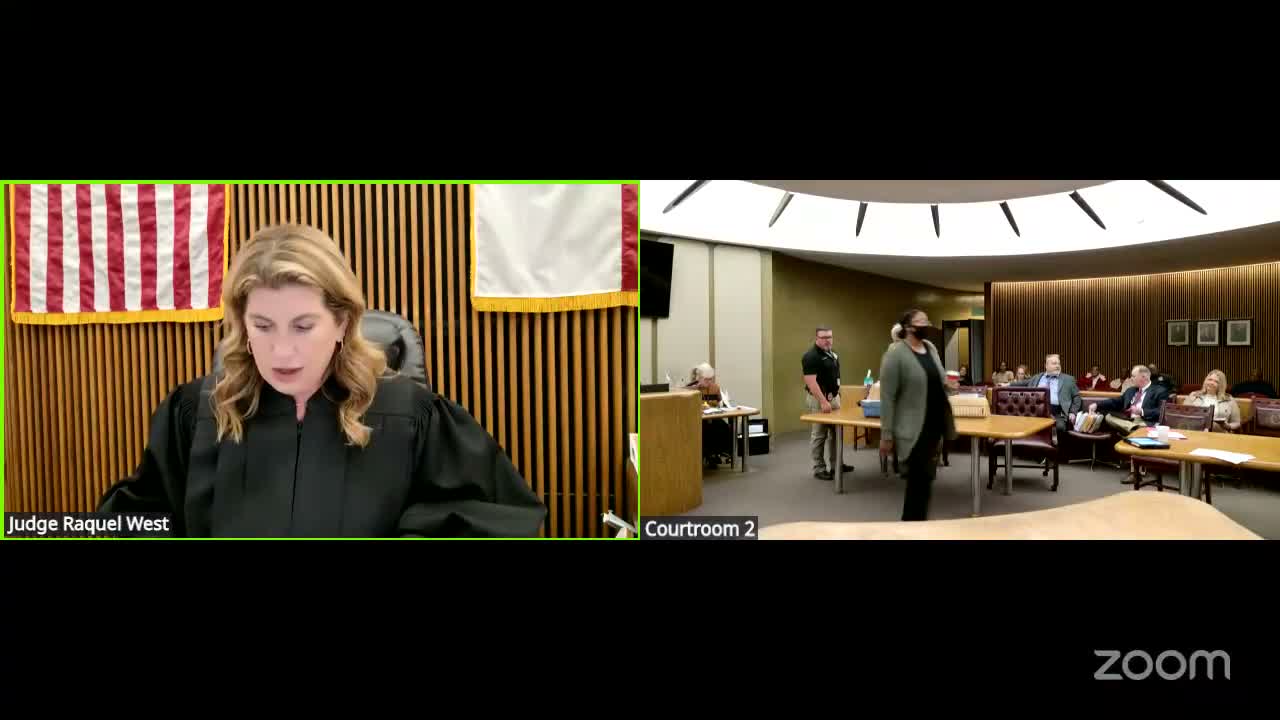
Summary
The 252nd District Court heard a large arraignment and sentencing docket, resulting in guilty pleas, bond adjustments and prison terms including a four-year sentence for Braxton Hughes and multiple state-jail sentences and probation conditions. The judge also ordered competency treatment and several case resets.
The 252nd District Court convened a full morning docket that produced multiple guilty pleas, bond adjustments and sentencing decisions across a range of felony and probation-revocation cases.
Judge presiding over the court called numerous cause numbers and dealt with discovery and procedural resets, bond settings, pleas and several final sentences. Key outcomes included a four-year prison sentence for Braxton Hughes after the court accepted his guilty plea to burglary of habitation; a four-year sentence in the institutional division for Tadaysha (Kadesha) Eli following admission to multiple probation-revocation allegations; and numerous plea-based dispositions that were continued for presentence reports or resulted in state-jail sentences.
Why it matters: The morning session resolved several cases that will affect the defendants’ custody status and supervision conditions, including imposition of GPS-monitoring requirements, conditions of no contact with victims or children, and court-ordered treatment. The court also addressed competency and treatment needs in at least one case and corrected procedural errors where sentencing paperwork misstated offense levels.
Most significant rulings and orders
Decisions at a glance: - Braxton Hughes (25DCCR1124): Judge accepted a guilty plea to burglary of habitation and sentenced him to four years in the Texas Department of Criminal Justice, with credit for time served and a written admonishment on firearm ineligibility. (Court finding and sentence announced in open court.) - Tadaysha (Kadesha) Eli: The court found probation violations true on counts 1–8 (injury to a child) and revoked probation, sentencing her to four years in the institutional division of the Texas Department of Corrections. - Adrian Banks (25DCCR1432): Pleaded guilty to harassment of a public servant; sentenced to two years in TDCJ under the plea agreement. - Latrick Williams (24DCCR1791): Court granted an out-of-time new-trial motion to correct a paperwork error, took pleas to amended counts and imposed an 18-month state-jail sentence under the corrected agreement. - Victoria Sanders (25DCCR1351): Pleaded guilty to theft with prior convictions; sentenced to 12 months in state jail to run concurrently with another case. - Multiple defendants (including Michelle Cormier, Jacoby Frazier, Robert Joseph Jr., Isaiah Brown and others): Courts accepted pleas or plea rejections, ordered presentence investigations where appropriate, reduced bonds (for example, Isaiah Brown’s bond was reduced to $1,000 with GPS and no-contact conditions in exchange for a presentence investigation) and imposed conditions such as no unsupervised contact with children and compliance with CPS requirements.
Representative court language and case management
The judge explained procedural choices and conditions repeatedly on the record. On setting bond in one family-related matter the judge said, “I’m going to set that bond at $30,000, condition of that bond is that you have no unsupervised contact with any children,” and emphasized compliance with child-protective-services requirements as a condition of release. When accepting plea-based sentences the court routinely handed defendants a trial-court certification and admonition regarding firearm ineligibility under Texas law.
Competency and treatment orders
The court took judicial notice of competency evaluations in at least one case, ordered inpatient treatment for a defendant found not competent to stand trial for a period not to exceed 120 days, and—when sentencing under plea agreements—placed some defendants on probation with explicit requirements for mental-health treatment and medication as conditions of supervision.
What’s next
Several cases were reset for announcement, additional discovery or sentencing after presentence reports. The court instructed counsel to file necessary paperwork for bond motions or motions to amend to ensure accurate records for eventual sentencing or trial scheduling. Defendants released on bond were ordered to report to probation immediately and comply with monitoring conditions.
Quotes
Judge (on bond conditions): “I’m going to set that bond at $30,000, condition of that bond is that you have no unsupervised contact with any children, including your own, and that you complete, whatever CPS is requesting that you do.”
Braxton Hughes (on rehabilitation steps after offense): “I was doing drugs… I did sober up, started going back to church with my mom… I tried to get into treatment.”
Ending
The court adjourned after completing the morning calendar and instructed counsel to submit corrected paperwork where necessary; multiple defendants were ordered to return for sentencing or hearings once presentence reports and additional filings are completed.