Planning commission hears 92‑acre Orchards master plan; continues hearing to Jan. 20 for conditions and follow‑up
Loading...
Summary
City staff, environmental and transportation consultants, and the applicant presented the Orchards master plan for the former Chevron Park, a proposed 92‑acre, multi‑phase redevelopment of Bishop Ranch into 2,500± homes with retail, parks and 397 affordable units; CEQA consultant found no new significant impacts beyond the adopted 2040 General Plan EIR. Commissioners requested additional detail on phasing, parks, traffic mitigation and conditions and continued the public hearing to Jan. 20, 2026.
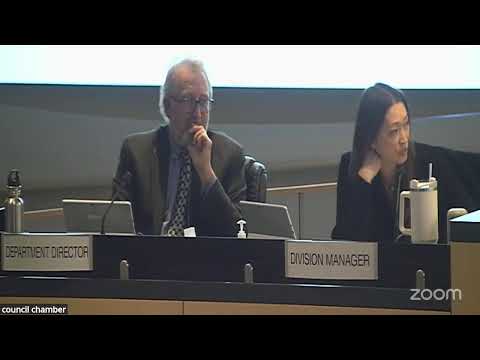
SAN RAMON — The Planning Commission on Dec. 16 received an extended presentation on the Orchards master plan, a 92‑acre redevelopment of the former Chevron Park that would remake a private office campus into a mixed‑use, multi‑phase neighborhood with housing, retail and parks.
Staff framed the item as a deemed‑complete application and explained that tonight’s meeting begins the SB 330 five‑meeting count for preliminary housing development review. City staff said the master plan establishes a 20‑year framework and that the commission is being asked to consider the master plan and entitlement for the neighborhood district (368 units + 58 optional ADUs); future development plans for the mixed‑use and multifamily districts will come back for detailed review.
Maddie Dolan of First Carbon Solutions summarized the CEQA consistency checklist and told commissioners the project is consistent with the certified 2040 General Plan FEIR. “All impacts were previously analyzed and mitigated under that general plan FEIR, and there were no project‑specific impacts peculiar to the site that would require additional CEQA review,” she said.
Applicant Stephanie Hill of Sunset Development described the Orchards vision: roughly 2,500 residential units across three districts (about 619 mixed‑use units with 125,000 sq ft of ground‑floor retail in the northeast; roughly 1,400 multifamily units; and a 368‑unit neighborhood district) plus 15 acres of parks and open space. Hill said the applicant proposes to meet and exceed the city’s inclusionary requirement by providing 397 affordable units across the plan and donating land for a 100‑unit standalone affordable community to be developed with Eden Housing.
The applicant also requests six state density‑bonus waivers, including a requested site‑wide reduction in minimum FAR from 1.25 to 0.79 and use of applicant design guidelines in lieu of some city objective design standards; staff and applicant said the project otherwise meets DMU South standards.
Andy Kosinski, the transportation consultant, presented vehicle‑miles‑traveled and operations analyses. Kosinski said the Orchards plan generally would generate fewer peak AM and PM commute trips than the site’s previous corporate headquarters use but would generate more trips overall throughout the day and on weekends. He identified three primary mitigation measures to keep VMT and intersection operations within acceptable thresholds: restriping the primary project driveway to add two left‑turn lanes, integrating two corridor sections into the adaptive signal system, and adjusting detector settings at the southbound ramp intersection. Kosinski also described a cumulative 2040 stress‑test scenario that, absent region‑wide improvements, could produce LOS F at three intersections due to background growth.
Commissioners pressed staff and the applicant on several issues: what approvals count toward the SB 330 five‑meeting limit; the phasing and schedule for demolition, infrastructure and first vertical construction; specifics of retail square footage (staff said 125,000 sq ft is the ground‑floor minimum while larger total square‑footage figures in CEQA reflect mixed‑use massing), parkland and parkland dedication calculations, timing of the perimeter greenway and multi‑use trails, soil/underground storage tank remediation and protections for the Eden Housing affordable parcel, and the proposed waivers for FAR and circulation standards.
Several members of the public urged focus on parks, traffic, fiscal impacts and pedestrian connectivity. Greg Carr urged stricter scrutiny of the project and asked whether commissioners could simply refuse extensions or approvals; other residents asked that park acreage and programming be clarified and that traffic safety and construction‑phase impacts be addressed in conditions.
Given the breadth of issues and the requirement to limit the number of public hearings under SB 330, commissioners directed staff to prepare follow‑up materials and a draft set of conditions addressing parkland dedication, phasing/timing estimates, traffic mitigation (including potential off‑site improvements and TDM measures), soil remediation safeguards for the affordable parcel, and clear summaries of analyses in the environmental checklist and technical appendices. The commission voted to continue the Orchards public hearing to a date‑certain of Jan. 20, 2026 so staff and the applicant can provide those materials and draft conditions.
What’s next: Staff will post a Q&A and a draft conditions packet in advance of the Jan. 20 hearing. Commissioners emphasized they want clearer phasing schedules, specific park and trail timing, intersection‑level traffic analyses and proposed contractual commitments for the 397 affordable units and the standalone affordable community with Eden Housing.
— Reporting by the Planning Commission hearing record; quotes and factual claims are attributed to speakers recorded in the transcript.