Get Full Government Meeting Transcripts, Videos, & Alerts Forever!
Get email alerts on the Land Use topic
No spam. Unsubscribe anytime.
Walton County board grants owner‑conditioned variance to allow portable shed in setback
Summary
The Walton County Zoning Board of Adjustment approved a 10‑foot rear setback variance and recognition of a 7.5‑foot side setback for a portable shed on Waterview Cove, imposing conditions that the shed be tied down, screened with vegetation and moved if the property is sold. Neighbors objected, calling it a self‑created hardship.
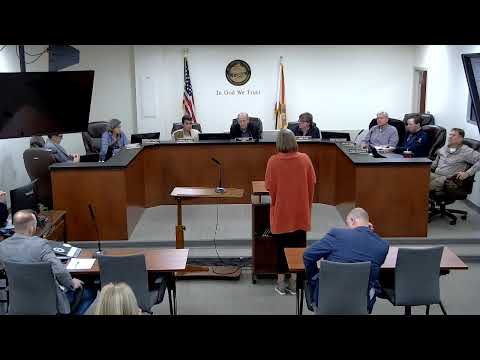
The Walton County Zoning Board of Adjustment on Dec. 15 approved a variance allowing a portable shed to remain inside required setbacks at 560 Waterview Cove, but the relief carries conditions that the shed be tied down, screened and that the variance run only with the current owner.
Kelly Schultz, a planner with Walton County Planning and Development Services, told the board that the application (project number VAR2500003034) requests relief for a roughly 196‑square‑foot portable shed and related driveway issues and that staff had entered its report into the record. "I have 2 variance requests," applicant Dan Curry told the board at the start of his presentation.
Neighbors and other residents urged the board to deny the shed request. Joseph Copeland of 599 Waterview Cove opposed the variance, saying the structure was placed without prior permits and characterizing the request as a "self‑created hardship" that would create unfairness if granted for one property and denied for another. "To grant the variance for this identical situation would be fundamentally unequal and would set an undesirable precedent," Copeland said.
Board members debated the legal and factual basis for relief. Staff explained that the lot's recorded plat created two 20‑foot street setbacks, which affects whether one street face is treated as a side or front yard; staff also noted a 15‑foot rear setback and a 5‑foot utility easement on the property. The board weighed those plat‑based setbacks against more recent setback practice of recognizing a 7.5‑foot side setback in comparable cases.
After closing public comment, a board member moved to grant a 10‑foot rear setback variance (effectively placing the shed 5 feet from the rear utility easement), to recognize a 7.5‑foot side setback on the street side, and to attach conditions: the shed must be tied down (if required by building code), a vegetative screening buffer must be added on the visible side, and the variance will terminate if the property is sold so the new owner must move the shed or bring the property into compliance. The motion carried; the chair instructed staff to draft a final order documenting those conditions.
The board's action does not change building‑code requirements. Schultz noted that sheds under a certain size and without utilities may not require a building permit but are still subject to planning review and building‑code tie‑down requirements when applicable. The order will be issued as a final order; neighbors unhappy with the ruling have 30 days to appeal the board's final order to circuit court.
The decision resolves the shed portion of Curry's application but leaves questions about driveway and curb‑cut variances that the board considered separately later in the meeting.