Oxnard engineer presents Safe Routes to School report, asks council to receive and file it
Loading...
Summary
Associate Engineer Jose Rivera presented a Safe Routes to School report covering 51 schools across four districts, funded by an Active Transportation Program grant and local ARPA-supported expansion, and recommended the city council receive and file the report.
Jose Rivera, an associate engineer in the traffic engineering division, presented Oxnard's Safe Routes to School report and recommended that the city council receive and file the document.
The report, developed with outside consultants and funded initially by a $300,000 Active Transportation Program grant with support from the Ventura County Transportation Commission, covers engineering, education, encouragement, enforcement and evaluation measures intended to improve walking and bicycling safety for students. Rivera said a 2022 expansion added $334,137 in local funding supported by American Rescue Plan Act (ARPA) resources to extend the work to additional schools.
Rivera said the program was developed in two phases. Phase 1 began in 2021 and produced Safe Routes materials for 26 schools in the Oxnard School District and Oxnard Union High School District. Phase 2, begun in 2022, expanded the work to the remaining 25 schools in the Rio, Ocean View and Hueneme elementary districts, bringing the total program scope to 51 schools.
The report groups recommendations for each school into three categories: infrastructure (for example, adding sidewalks, high-visibility crosswalks, curb extensions and pull-outs, and adjusting signal timing during school rush hours); programmatic measures (crossing guard programs and training); and operational changes (staggered arrival and dismissal times, opening alternate gates, and increasing staff presence during peak times).
Rivera described examples from walk audits conducted between 2021 and 2024: crossing guards assisting pedestrians, vehicle queuing that caused encroachment into driveways at dismissal, midblock crossings by parents, illegal parking in loading and handicap zones, and students biking across traffic. He said the city and consultant teams performed 51 walk audits across four districts and 51 schools.
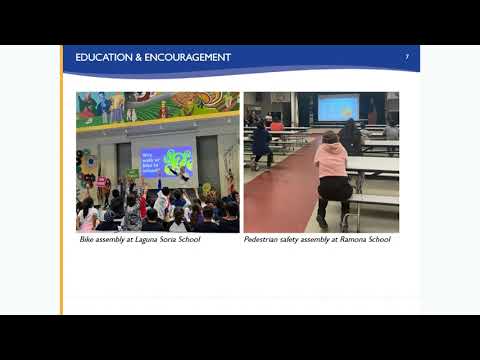
Rivera also highlighted education and encouragement activities the city ran with schools, including bike workshops, pedestrian safety assemblies, a walking-bus event on National Walk to School Day and an art competition to promote alternatives to parent drop-offs.
The report classifies projects by level of effort; Rivera said high-effort projects are flagged for further study, funding pursuit and longer timelines, while other recommendations are intended for near-term implementation. He stated there is no financial impact in the act of receiving and filing the report itself.
Rivera concluded by reiterating the recommendation that the council receive and file the Safe Routes to School report, noting the individualized road maps and one-page summaries prepared for each school. The presentation closed with a request that the council accept the report into the public record.