
Minot council hears hours of public comment on license‑plate readers; matter set for January vote
Get AI-powered insights, summaries, and transcripts
Subscribe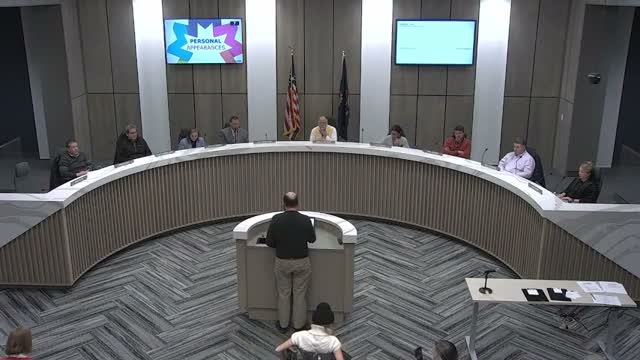
Summary
After extensive public comment and council questioning, Minot police and council agreed to return the proposal to deploy Axon in‑car automatic license plate readers to the January agenda for a formal vote and possible policy revisions.
The Minot City Council heard more than two hours of public comment and a detailed presentation from police on the proposed use of Axon automatic license‑plate readers (ALPR) in patrol cars, and on a unanimous procedural vote the council agreed to put the item on the first January meeting for a full, recorded decision.
Residents who came forward at the public‑comment portion urged different outcomes. Chris Brown told the council he opposed both vehicle‑mounted and pole‑mounted readers, saying the research on crime reduction is uncertain and urging scrutiny of vendor practices: "I oppose both the currently discussed implementation of Axon license plate readers and police vehicles and the previously proposed installation of flock automatic license plate readers on stationary structures," he said. Joan Hawbaker and others urged clearer policy language on sanctions for improper access.
Supporters and law‑enforcement experts argued the devices are a legitimate investigative tool when policy safeguards are in place. Jeremy Enzrude, a criminal‑law instructor who reviewed court precedent and the department policy, told the council "LPRs are legal and cost effective" and recommended robust safeguards; he cited the department policy included in the online agenda (Policy 4.33) and the automatic 30‑day deletion rule for non‑investigative records.
Police Chief Dale Fry defended the proposal as an officer‑safety and investigative tool that differs from fixed, pole‑mounted systems. "This is not Flock," Fry said, adding that data are retained in a state repository for 30 days and that officers must record a case number and justification to access data. The deputy chief added the system is currently not active and that the policy amendments approved earlier this year were intended to add safeguards.
Council members pressed for specifics about storage, access, oversight and the limits of city authority. Alderman Olsen moved to put the topic on the first January agenda so a full seven‑member council can vote; the council approved that scheduling motion unanimously. Councilmembers also signaled an interest in additional edits to the policy before any activation of the system.
Next steps: the council will consider ALPR activation and any amendments to the department policy at the January council meeting, after which staff and the police department will either proceed with activation or return with further changes.