Augusta commission adopts FY2026 budget with no millage increase after debate over NGO cuts, library funding and sheriff staffing
Loading...
Summary
After hours of debate, the Augusta City Commission adopted a balanced FY2026 budget with no millage increase, relying on $4.8 million in one‑time funds and cuts to discretionary NGOs; commissioners voted to treat the public library like a county department to protect state funding and heard warnings from the sheriff about staffing impacts.
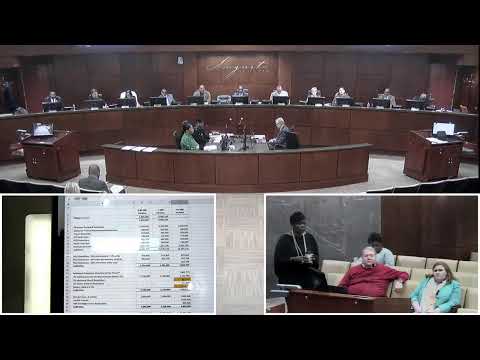
Mayor Johnson and the Augusta City Commission adopted a fiscal‑year 2026 budget on Dec. 16 without raising the millage rate after an extended debate over how to close a structural gap.
Administrator Maddie Allen presented a ‘‘no‑mill increase’’ option that she said relied on $4.8 million in one‑time resources — including a six‑month hiring freeze, a transfer of landfill receipts, hurricane‑related receipts and reallocated ARP funds originally set aside for a streetlight project — plus deeper cuts to discretionary nongovernmental organizations (NGOs) and an additional 2% reduction to most general‑fund departments. Allen emphasized the option is not the administration’s recommended long‑term solution and warned the county will likely face the same budget pressures in 2027.
The commission’s discussion focused on tradeoffs between short‑term balance and long‑term stability. Commissioner Jordan Johnson moved a package that would have included a 0.85 mill increase, restoration of several NGOs to 30% funding, full library restoration and no further cuts to the sheriff’s, district attorney’s or courts’ budgets; that motion was seconded but failed on a roll‑call vote.
Public safety officials urged caution about deep cuts. Sheriff Eugene Brantley told the commission his office had already cut dozens of positions and that further reductions would erode progress on crime reduction and affect jail operations: “We have cut 52 positions … we cut another 30 positions,” he said, and warned the department is not sustainably staffed to accept more reductions without service impacts.
Library Director Michael Mitchell warned commissioners that state and federal library funds are tied to a maintenance‑of‑effort agreement, and cutting the library more than other departments could jeopardize roughly $581,000 in grants and reimbursements that pay for internet service, STEM grants, E‑rate reimbursements and other programs. After hearing that risk, the commission voted to treat the library like other county departments for whatever percentage reductions the governing body ultimately adopts so that the county could seek a waiver or otherwise preserve state funding.
Interim public defender leadership urged the commission not to cut the office’s contract labor line, saying that funding pays for attorneys, investigators and client services that help secure treatment programs and ensure representation for indigent defendants. Director Mason said the office needs retained contract labor to perform constitutionally required duties.
In the final sequence, commissioners directed staff to model a narrower set of alternatives during a brief recess (including reducing the sheriff’s cut to 1% instead of 2% and the possible use of furlough days) and returned with a revised worksheet. Administrator Allen said the revised no‑mill option left a roughly $47,000 shortfall that could be covered by contingency. Commissioner Brandon Garrett moved to adopt that worksheet — no millage increase and no furlough days — which the commission approved by roll call. Mayor Johnson announced the budget’s adoption and set the previously noticed regular meeting to reconvene at 2 p.m.
The approved plan uses one‑time funds and departmental reductions to balance the 2026 budget, but administrators and several commissioners warned that without new recurring revenue the county may face the same choices next year. Staff were directed to continue work on efficiencies and to return with additional analysis during the 2026 budget cycle.
The commission also recorded several ancillary directions: staff to clarify which NGOs and authorities are restored under different scenarios, legal counsel to prepare memoranda on the county’s ability to transfer enterprise funds, and finance staff to model the fiscal impact of a short‑term hiring freeze and potential furlough options. The commission recessed and planned to resume the regular meeting at 2:00 p.m.