
Holt Street 70th anniversary honors bus‑boycott organizers; speakers urge renewed organizing and voter turnout
Get AI-powered insights, summaries, and transcripts
Subscribe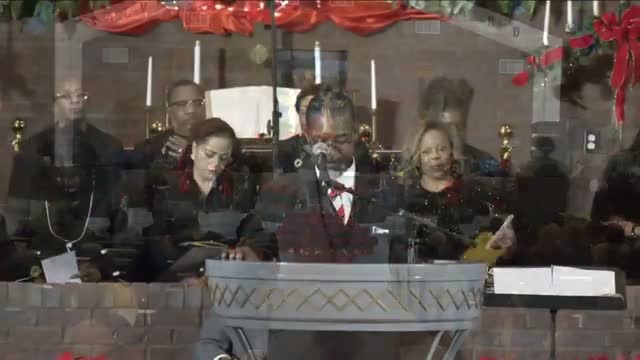
Summary
Hundreds gathered at Holt Street Memorial Baptist Church to mark the 70th anniversary of the Montgomery bus boycott. Speakers recalled the 1955 mass meeting, heard poetry and music, and urged continued organizing, with the ACLU’s Project Move pressing for higher turnout ahead of Alabama’s 2026 primary.
HOLT STREET MEMORIAL BAPTIST CHURCH — Hundreds gathered at Holt Street Memorial Baptist Church in Montgomery on the 70th anniversary of the mass meeting that launched the 1955 Montgomery bus boycott, where speakers, musicians and poets recalled the city’s role in the civil‑rights movement and urged renewed political organizing.
The evening included eyewitness testimony from Lloyd Howard, poetry by the state’s poet laureate Jacqueline Allen Trimble, performances by the Montgomery United Mass Choir and a keynote sermon from the Rev. Dr. Otis Moss III. Kenya Shavers, voting‑rights coordinator for the ACLU of Alabama, urged congregation members to convert the commemoration into action, including plans by Project Move to increase turnout.
“Make a way,” Otis Moss told the assembly, framing the anniversary as an obligation to future generations. Lloyd Howard, introduced as an eyewitness to the 1955 boycott, recounted how ordinary residents sustained the movement: “They held on for 381 days,” he said, describing the community’s decisions to boycott buses and press for Black employment in transit jobs.
Kenya Shavers described Project Move as “making our voices echo,” and said the ACLU aims to boost turnout by 5 percent through on‑the‑ground organizing in churches, barbershops and college campuses. She urged attendees to be present at the Alabama State House when it reconvenes and to prepare for the Alabama primaries scheduled for 05/19/2026, saying the work of commemoration must lead to participation at the ballot box.
The program repeatedly returned to the theme of collective responsibility. Speakers highlighted lesser‑known organizers — from Joanne Robinson’s mimeographed leaflets to Georgia Gilmore’s fundraising through local cooking — and called for sustained, everyday organizing rather than one‑off memorial events.
In closing, clergy offered a benediction asking for perseverance and justice, and organizers encouraged attendees to continue the work of the boycott-era movement through civic engagement and voter mobilization.