Lifetime Citizen Portal Access — AI Briefings, Alerts & Unlimited Follows
Experts warn Russia’s ‘Max’ app consolidates device data and threatens access to the global internet
Loading...
Summary
At a U.S. Helsinki Commission briefing, three experts described Max as a state‑backed "super app" that consolidates messages, contacts, location and device data; they urged U.S. funding for circumvention tools, private‑sector protections for VPNs and closer oversight of export risks.
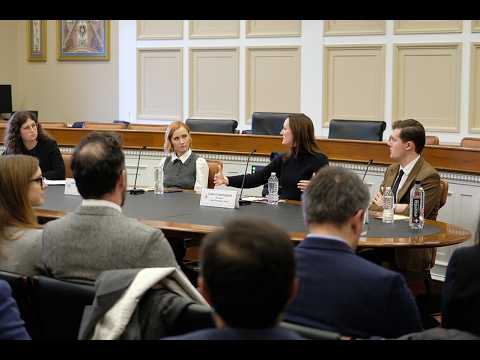
At a briefing hosted by the Commission on Security and Cooperation in Europe (the U.S. Helsinki Commission), panelists warned that Max, a new Russian app, is being pushed by authorities as a one‑stop platform that can give officials broad access to users’ messages, contacts, Internet usage and location.
The Director, U.S. Helsinki Commission, introduced the panel and framed the discussion around reports from occupied Ukraine and a recent trip to Kyiv, saying the Kremlin has "launched Max, a super app that gives Russian officials wide ranging access to users' messages, contacts, Internet usage, and location." Panelists then described how Max fits into Russia’s wider approach to censorship and surveillance, and recommended concrete steps the United States and private companies could take to blunt its effects.
Why it matters: Panelists argued that Max is not merely another messaging app but part of a broader model of platform substitution and layered censorship. Laura Cunningham, president of the Open Technology Fund, said the Kremlin’s strategy risks creating concentric barriers to the global Internet—platform substitution, meta‑censorship and the blocking of circumvention tools—that can erode what she called users’ "muscle memory" for accessing independent information.
What the experts said: Anastasia Gimont of AccessNow outlined technical risks, saying Max embeds tracking analytics that link personal identifiers to other account IDs, includes precise geolocation, and is reportedly capable of "secretly switching on your microphone, your camera, or even screen recording." Gimont also said the app comes preinstalled on devices sold in Russia starting Sept. 1 and that app‑store removals of VPNs and other circumvention tools have reduced options for users seeking secure access to independent information.
Justin Sherman of Global Cyber Strategies placed the app in historical context, calling it part of a long‑standing Russian surveillance ecosystem. He said VK, the developer, is operating under legal and coercive pressures that have helped the state promote the app, and urged renewed congressional funding for anti‑censorship and privacy technologies and for continued U.S. oversight of related executive‑branch activities.
Policy proposals and private‑sector steps: Panelists recommended a two‑track response. First, increase support for a diverse set of circumvention, privacy‑enhancing and shutdown‑mitigation tools so Russian users can remain connected to the global Internet. Second, press U.S. and international technology companies to adopt clearer, consistent policies on when to comply with takedown and app‑store requests—particularly those that remove VPNs or tools funded to support human rights. Laura Cunningham noted that some U.S. government–funded VPNs have been removed from app stores, undermining efforts to support users in authoritarian contexts.
On export and adoption: Panelists warned that Max and the model it embodies are already spreading to neighboring states and parts of the near abroad. Anastasia Gimont said the app had launched in Belarus, Moldova and several Central Asian states and that adoption is often driven by users trying to stay connected with relatives in occupied territories. Experts cautioned that even if the app itself is not adopted wholesale, aspects of the model—legal instruments, centralized infrastructure and platform substitution—could be replicated by other governments.
Limits of the record: Panelists said they had not seen verified, publicly reported cases directly linking Max to specific arrests or fines at the time of the briefing, though they described inspections and targeted enforcement in occupied territories and said those practices increase the risk to journalists, civil society actors and opposition figures.
Next steps: Panelists urged congressional funding and oversight of anti‑censorship programs, continued technical investment in circumvention and resilience tools, and closer coordination with European partners to reduce the appeal of state‑centered super apps. The Helsinki Commission announced a follow‑up briefing on European and Ukrainian defense‑supply‑chain procurement.
Quotes from the briefing are taken verbatim from the panel transcript and attributed to speakers who presented them at the event.