Citizen Portal
Sign In

Former diplomats on 'The Transatlantic' say U.S. misread Russia; urge negotiating with recognition of its status

Commission on Security and Cooperation in Europe (U.S. Helsinki Commission): House Commission · December 9, 2025

Loading...

AI-Generated Content: All content on this page was generated by AI to highlight key points from the meeting. For complete details and context, we recommend watching the full video. so we can fix them.

Summary

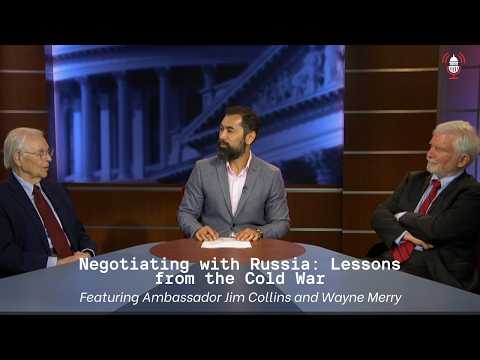
On The Transatlantic podcast, Wayne Merry and Ambassador James Collins argued Washington repeatedly misread Russia’s self-image, questioned the long-term utility of sanctions, and said ending the war in Ukraine requires clear incentives and Russia’s acceptance of Ukraine’s nationhood.

Two former U.S. diplomats told the Commission on Security and Cooperation in Europe’s podcast The Transatlantic that Washington has long misread Russia’s self‑perception and that current policy tools, especially sanctions, offer limited leverage.

Ambassador James Collins said the core problem is a persistent U.S. perspective that treats Russia as a defeated power rather than “one of the world’s great powers.” He argued that post‑Cold War U.S. policy often assumed Russia had “lost a war,” while Moscow never accepted that framing and continued to see itself as a peer power.

Wayne Merry, author of a recently declassified memo the host referred to as the Long Telegram, said he wrote to emphasize that U.S. policymakers “never listen,” and that repeated American optimism about Russia’s political transformation overlooked Russian priorities and grievances. “Oh, I was never foolish enough to imagine that anything that I wrote individually sitting at the embassy in Moscow is gonna affect anything that Washington did,” Merry said.

Both guests criticized the sanctions regime as politically durable but strategically blunt. Merry said many sanctions are perceived in Moscow as effectively permanent because lifting them often requires congressional approval, limiting their value as an inducement. “The thing about sanctions is it’s what they do when you feel politically you have to do something,” he said, arguing they seldom offer meaningful mutual benefits that would change Russian behavior.

The conversation moved to the war in Ukraine, where the guests described Russian military action as a brutal campaign against Ukrainian civilians and national sovereignty. Merry said Vladimir Putin has helped crystallize a strong Ukrainian national identity: “If any person is the ... godfather of a Ukrainian national identity, it’s Vladimir Putin.” Both speakers said a negotiated settlement will demand painful concessions and — critically — a Russian acceptance that Ukraine is a sovereign nation with a legitimate seat at the United Nations.

On the question of how to end the war, Collins stressed the diplomatic challenge of identifying what each side would gain from stopping hostilities. “What’s in it for the Russians or the Ukrainians to stop?” he asked, arguing that Washington must be clearer about post‑conflict expectations and the incentives available to both Kyiv and Moscow.

The guests also discussed the strategic consequences of China’s rise and Europe’s role in managing relations with Russia, with the observation that recent decades have pushed Moscow and Beijing into closer partnership when U.S. policy toward both has grown more adversarial.

The episode concluded without specific policy prescriptions, but with agreement that understanding Russian self‑identity, designing credible incentives, and engaging Europe and other partners will be essential to any durable settlement.

The podcast is produced by the U.S. Commission on Security and Cooperation in Europe and was hosted by Bakhtanyushono. The Commission has not taken a vote or formal action in the episode; the program recorded expert analysis and recollections.