Get Full Government Meeting Transcripts, Videos, & Alerts Forever!
Get email alerts on the Rental Regulation topic
No spam. Unsubscribe anytime.
Tinley Park trustees debate sweeping rental overhaul; no vote taken
Summary
Trustee Shaw presented a six-part draft to tighten rental ownership limits, require interior inspections, increase transparency of beneficial ownership and raise fees; trustees discussed implementation, staffing and tools to identify unregistered rentals but took no formal action at the committee level.
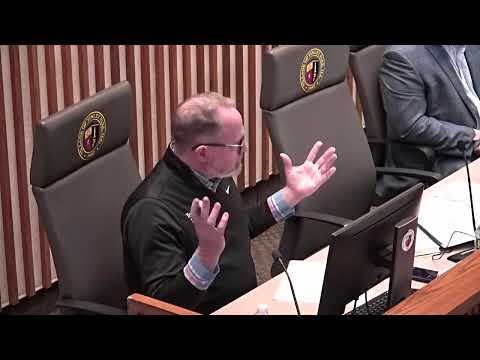
Trustee Shaw outlined a multi-page draft ordinance package aimed at tightening Tinley Park’s rental licensing and enforcement framework, saying the proposals are designed to increase owner-occupancy, stabilize neighborhoods and limit the negative impacts of absentee and corporate landlords.
“My proposal is that we completely reverse the course, and that we require interior inspection of all new rentals,” Trustee Shaw said, describing six key elements: limits on ownership of single-family and duplex units, prohibitions or disclosure requirements for large and foreign ownership, expanded interior inspections at licensing/renewal, occupancy and lease transparency rules, stronger property-maintenance penalties and mandatory beneficial-ownership disclosure for rental licenses and transfers. Shaw said the proposals would be phased and that staff capacity and legal review will be required.
Shaw noted the draft’s data are preliminary and not validated: he cited a figure of roughly 760 currently licensed units in the village but said U.S. Census Bureau American Community Survey estimates and internal calculations suggest far more rentals exist — he quoted both an ACS estimate of about 8,500 rental units and a local-derived range of roughly 3,500–5,500 rental units, and cautioned the numbers were unvalidated in the packet.
Trustees asked staff about practical steps to identify unregistered rentals. One trustee suggested using the village’s ERP transfer-stamp and a water-account name search to flag likely rental conversions; staff said the transfer-stamp and other interdepartmental steps could be used and that further integration of public works, safety and development records would help. Trustee comments repeatedly emphasized enforcement capacity: trustees said any new inspection or registration program would need fees and a tiered schedule so it can be self-sustaining.
Board members also raised concerns about corporate, absentee ownership. Shaw cited large institutional buyers by example — saying “BlackRock is one of the biggest” — and referenced past cases involving Invitation Homes where multiple corporate entities masked ultimate ownership. Those remarks were framed as drivers for the beneficial-ownership disclosure proposal; no staff report or outside verification of ownership counts was presented at the meeting.
No motion or vote was taken on the draft at the Committee of the Whole; Shaw said the item was intended to “kick off the conversation” and to seek a sense of direction and areas for staff follow-up. Trustees asked staff to explore: how the transfer-stamp can be customized to indicate next property use; whether a registration step with penalties for failure to register could be implemented first; and how a phased inspection program and fee structure might be calibrated to reach full cost recovery.
The committee concluded the discussion without advancing an ordinance; trustees asked staff to return with legal review, validated counts of rental units, fee estimates and proposed implementation phases before any formal action.