Berkshire Bank VP Urges Small Businesses to Prepare for Delays as SBA Processing Slows
Loading...
Summary
At the Tolland County Chamber annual meeting, Chad Steer of Berkshire Bank urged businesses to prepare loan applications early and keep lines of credit open as SBA processing slows during a federal shutdown; preferred lenders can advance some loans but new closings may be delayed.
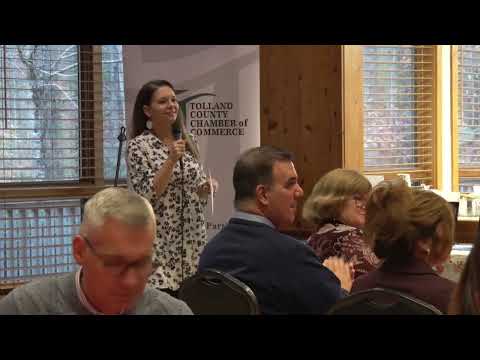
Chad Steer, vice president for business development at Berkshire Bank, told members of the Tolland County Chamber of Commerce that the Small Business Administration (SBA) remains operational in some respects but that federal shutdown-related delays are affecting loan processing. “SBA program is shut down at the moment, but that doesn't mean that we're dealing with lending happening either in the conventional world or the SBA world,” Steer said during the chamber's 60th annual meeting.
Steer described how preferred lenders can take applications and, in some cases, close loans that have reached an advanced stage in underwriting by using pre-assigned PLP (Preferred Lender Program) numbers. But he warned that new applications may be held up until agencies such as the SBA and the IRS restore standard processing. Asked whether preferred lenders are still closing loans, Steer said lenders can close loans already deep in underwriting but cannot move new applications past certain federal checkpoints while the shutdown persists.
Using a recent client anecdote, Steer illustrated why businesses should maintain contingency funding. He recounted a borrower who urgently needed about $40,000 after equipment loss; because of SBA rules and timing, the loan could not be made as immediate cash to the owner’s personal account. “We were not able to give him the $40,000,” Steer said, urging owners to keep lines of credit or reserve funds for emergencies.
Steer recommended practical steps: assemble tax returns and documentation in advance, work with a trusted banker to understand required underwriting materials, and submit applications early so a loan can close when agency systems reopen. He also pointed attendees toward local resources for startups and business planning, including the Small Business Development Center (SBDC) and local economic development organizations.
The takeaway for chamber members: application preparation and contingency planning reduce risk if federal systems slow. Steer closed by encouraging business owners to “get the money when you don't need it,” so they are not in a rush if an emergency arises.