Get Full Government Meeting Transcripts, Videos, & Alerts Forever!
Get email alerts on the Land Use Quarry Zone Change topic
No spam. Unsubscribe anytime.
Planning board recommends zone‑change overlay for Pound Hill quarry with monitoring, setback and bond stipulations
Summary
After a GZA peer review and hours of public comment on dust, groundwater and restoration, the North Smithfield Planning Board voted to forward a positive recommendation to the Town Council for a zoning overlay that would formalize operations at the Pound Hill quarry and attach stipulations including a mine/restoration plan, monitoring, a 200‑foot setback where available, and a performance bond.
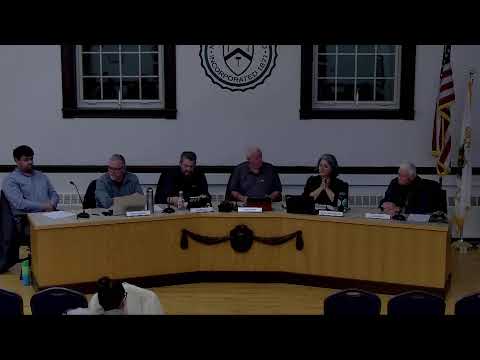
The North Smithfield Planning Board voted Dec. 11 to forward a positive recommendation to the Town Council for a proposed zoning overlay for Pound Hill Realty LLC’s quarry, attaching a suite of stipulations intended to limit environmental and community impacts.
The board’s action followed a presentation by Tony Urbano of GZA Engineering, the town’s hired peer reviewer, extensive questioning from board members about dust and groundwater risks, and roughly two hours of public comment from the applicant’s representatives, technical consultants and several abutters. The recommendation asks the council to require a mine plan that defines maximum excavation depths, a restoration plan that addresses final grades and eventual reuse, monitoring wells and data sharing, dust‑control measures, a minimum 200‑foot setback from abutting residential property where sufficient land exists, and liability insurance or a performance bond for potential damages.
Why it matters: the site sits near two Superfund sites and within a water‑supply protection overlay identified in North Smithfield’s comprehensive plan. Board members and residents said those conditions increase the need for a detailed mine plan, hydrogeologic evaluation of how deep the quarry may be excavated, and enforceable funding or insurance to remedy potential harm to private wells or property.
GZA’s peer‑review findings and board questions Tony Urbano told the board GZA "generally agreed with the testimony provided by the experts" and summarized recommendations in a written peer‑review (10/06/2025) that the board had received. Urbano recommended that any restoration plan evaluate final grades and rock‑face stabilization, that a hydrologic consultant assess impacts to nearby private wells, and that the mine plan define bottom elevations because potential effects differ substantially if excavation remains 50 feet below the water table versus 100 or 200 feet below it.
Board members repeatedly pressed for concrete measures on dust and silica. Urbano said the peer review supports a dust‑control plan and that typical best practices include watering, automated misters and targeted paving at high‑use entrances; he emphasized the regulatory standard that operations must prevent emissions from leaving the property. "There should be a plan," he said, and added that monitoring wells and periodic peer reviews should be used to evaluate longer‑term trends.
Public comment and competing framings Representatives for the applicant said the overlay and conditions create a planning framework for a long‑running operation and would let the town access data submitted to other agencies. Bill Landry, representing the applicant, said the purpose was to produce an enforceable plan: "We didn't come here for a permit to establish this operation or to continue to operate it. It's a 70‑year situation... We came here to try to establish a planning approach to this property." Technical consultants for the operator emphasized long‑standing monitoring systems, infiltration basins and voluntary blast‑vibration monitoring.
Nearby residents and the Groundwater Protection Committee urged stronger protections. Abutter Rebecca DeChristopher described breathing difficulty and said she was "not comfortable" with the proposed 200‑foot buffer as written; she and committee members urged hydrogeologic assessments at different excavation depths, funding for independent town peer review, and escrow or bond mechanisms to address potential well or foundation damage.
Board motions, stipulations and vote After deliberation the board moved to forward a positive recommendation to the Town Council conditioned on the planning office’s 12 recommended stipulations and additions discussed that night. Planning staff read an added condition requiring the applicant to "provide adequate liability insurance and/or performance bond for potential damages to abutting residences," with the bond amount to be set by the town council. The board conducted a roll‑call vote and, after amending the motion to incorporate the planning office findings on comprehensive plan consistency, approved the recommendation to send to council.
What the recommendation does—and does not—do The Planning Board’s vote is a recommendation to the Town Council, not a final zoning change. If the council acts, the zone change would proceed through council passages and any statutorily required noticing and appeal periods; planning staff said the council would determine timing for when specific items (for example, a restoration plan, fencing or monitoring installation) must be completed.
Next steps The matter moves to the North Smithfield Town Council for consideration. The council will receive the Planning Board’s recommendation and the compiled stipulations, determine the schedule for required plans and documents, and decide whether to approve the overlay and the attached conditions.
A copy of GZA’s peer‑review report and the materials submitted to that reviewer were requested to be made part of the record.