
Kyrene board adopts ‘4‑2’ closure model after weeks of public hearings; vote 5–0
Get AI-powered insights, summaries, and transcripts
Subscribe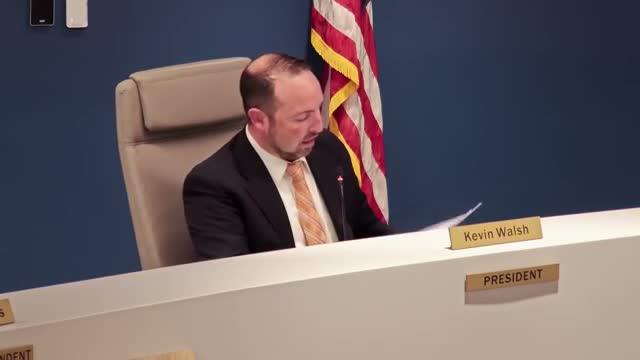
Summary
The Kyrene Elementary District governing board voted unanimously to adopt the '4‑2' school‑closure and boundary model after hours of public comment and discussion of alternative models and estimated savings. The board framed the decision as legally necessary to help balance a budget shortfall while promising transition supports for students and staff.
The Kyrene Elementary District governing board voted 5–0 on Dec. 16 to adopt the district’s “4‑2” school‑closure and boundary model following public comment from parents, teachers and students and extended discussion of alternative proposals.
Superintendent Laura Tenas opened the discussion by describing the item as the culmination of months of committee meetings, public hearings and community feedback and said staff would prioritize supports for students and staff through any transition. Legal counsel Jordan O’Lell explained the board’s modified Robert’s Rules‑style process for considering multiple proposals and steps for motions and votes.
During public comment, speakers offered sharply different recommendations. Several parents and volunteers urged the board to close as few schools as possible—arguing that large‑scale closures risk triggering an enrollment attrition spiral and eroding trust—while other speakers, including a longtime teacher, urged closing all eight schools proposed in order to balance the district’s budget. A student speaker, Kira Lee, urged the board to consider classroom impacts of instructional programs such as I‑Ready, Amplify and Mathia.
Board members debated three principal variants: the “5‑0” model (which would have kept one high‑enrollment school open), a hybrid “5‑1” proposal combining elements of previous east‑side and west‑side maps, and the long‑range committee’s recommended “4‑2” model. Member Cedric Collins moved to adopt the 5‑0 model; that motion failed on a 2–3 vote. President Kevin Walsh then proposed a hybrid 5‑1 map and briefly moved it, but after discussion there was no sustained second and the proposal did not proceed.
Vice President Trina Nelson moved to adopt the 4‑2 model; Member Amy Satri seconded. After additional discussion about capacity and staffing impacts, the board adopted the four‑two proposal by a unanimous 5–0 vote.
District staff and consultants presented preliminary financial and utilization information during the debate. They said adding a middle school to an elementary‑only closure scenario could increase personnel savings by roughly $800,000 and that not operating a building could add on the order of $500,000 in annual operational savings; the combination of those factors was described by staff as producing about $1.3 million in additional potential savings for adding a middle school to the smaller closure plan. Board members noted that none of the proposals fully reached the district’s stated target savings (the presentation referenced a $6.7 million target) and that further budget work will be required.
Several board members framed the vote as balancing fiscal necessity and community harm. Vice President Trina Nelson said the board must meet its legal obligation to adopt a balanced budget while trying to minimize concentrated impacts on disadvantaged communities. Member Bonnie Davis thanked long‑range planning committee members and district staff for months of work and urged the community to support affected families and employees during the transition.
The board approved several other items earlier in the meeting, including two procurement contracts (K260131 for the dental PPO network and K260231 for voluntary critical illness/accident insurance), each of which passed 4–0 with Member Amy Satri abstaining because of her professional involvement in health care. The board also approved proposed Arizona School Boards Association bylaw revisions and the modified meeting agenda.
Next steps described by district staff included more detailed staffing and enrollment analysis, transition planning for students and families, and continued community outreach. The board scheduled its next regular meeting for Jan. 13, 2026. The meeting adjourned at 7:20 p.m.