
Nevada Gaming Control Board recommends broad overhaul of Regulation 14 to implement AB 58 and streamline approvals
Get AI-powered insights, summaries, and transcripts
Sign Up Free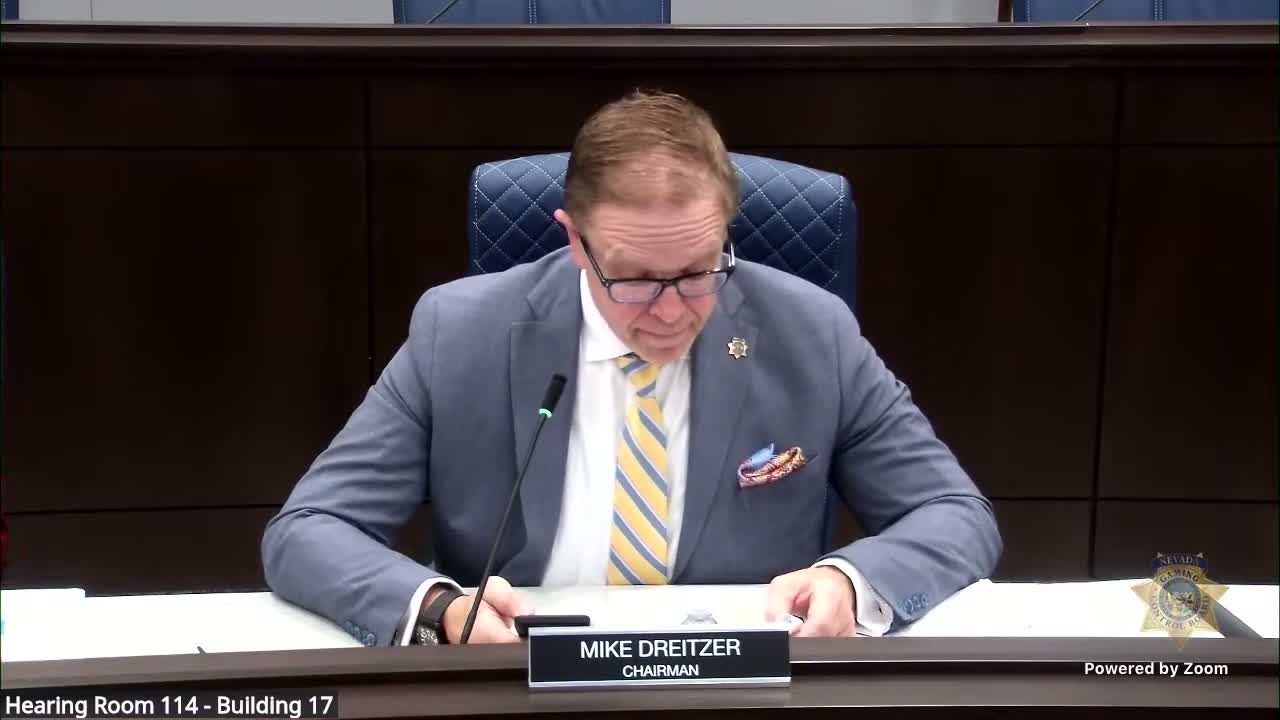
Summary
At a Dec. 16 workshop the Nevada Gaming Control Board voted to recommend amendments to NGC Regulation 14 that implement Assembly Bill 58’s administrative-approval authority, add definitions for new games and operators, remove certain submission requirements, and give the board chair conditional approval and waiver authority; industry raised questions about materiality, adaptive play and a 75% payback metric.
The Nevada Gaming Control Board on Dec. 16 voted to recommend amendments to Nevada Gaming Commission Regulation 14 that would codify administrative approval authority for new games and devices, standardize definitions and remove certain submission requirements, board and staff members said.
Ed McGaugh of the Nevada Attorney General’s Office presented the draft changes and told the board the amendments reflect a statutory change in Assembly Bill 58 (2025) that allows administrative approval of new gaming devices and games. McGaugh said the draft also deletes lengthy lists of application items so the chair may prescribe necessary forms and may correct a minor wording error before release.
Deputy Chief Jeremy Everwine, who leads the lab’s administrative division, walked the board through the draft, saying it consolidates definitions (adding "new game," "game variation" and "operator of an inter casino link system"), moves many submission requirements into chair‑prescribed forms or industry notices, and adds chair authority to condition or limit approvals and to waive technical-standard requirements for associated equipment.
"We don’t want to regulate ourselves out of competitiveness with other jurisdictions," Everwine said, explaining the changes are intended to modernize 25‑year‑old rules, reduce burdens that proved unnecessary and align Nevada’s regulations with nationally recognized standards.
Industry representatives said they generally welcome the streamlining but sought clarity on several points. Dan Reeser of Fenmore, speaking for the Association of Gaming Equipment Manufacturers, asked how the draft will determine whether a game is "materially different" in function, design or operation — a threshold that decides when a new-game approval is required. "When you're in the trenches at the manufacturer, you need to know when you need to get an approval of a material change or not," Reeser said.
Everwine said the lab has internal, unpublished guidelines for distinguishing new games from variations and that staff is open to publishing guidance or issuing an industry notice to clarify materiality.
Industry counsel also asked whether removing a subsection of Reg. 14 that previously targeted adaptive‑play mechanics effectively reopens adaptive play in Nevada. Chair Dreitzer and Everwine said that was not the intent: regulators would rely on subsection 1 — which requires that a game outcome be determined by chance, skill or a combination — to exclude adaptive‑play systems that alter outcomes based on a player’s behavior.
Manufacturers also questioned a 75% minimum payback requirement in the draft game‑minimum standards. Everwine said that standard had been applied historically to many house‑banked table games after independent testing‑labor math analysis and was retained to ensure fairness across game types.
After discussion and minor on‑the‑record edits, the board voted to recommend the Regulation 14 amendments to the Nevada Gaming Commission. Judge Assad moved the recommendation; the board secretary called the roll and the members present voted "Aye." The board will publish a revised draft incorporating the edits before the commission considers the package.
What happens next
The board will publish the revised Regulation 14 draft and accept further written comments. Staff signaled it expects to present a full package — including technical‑standards updates — to the Nevada Gaming Commission at the February commission meeting or, if needed, in March.
The board asked industry stakeholders to submit any proposed redlines or clarifying language, particularly on materiality and modification definitions, so staff can incorporate widely agreed language before the commission takes up the proposals.