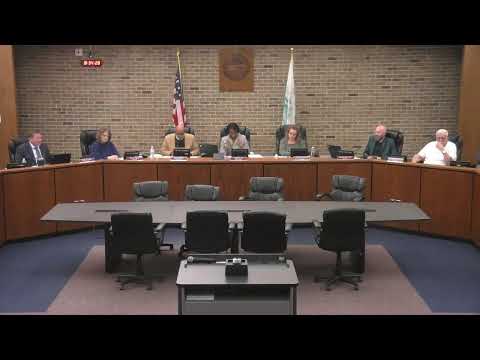
Romulus accepts $500,000 state legislative grant for Cogswell Road repairs; city to contribute $128,072
Loading...
Summary
The Romulus City Council authorized a $500,000 state legislative sponsorship grant for concrete pavement, curb repair and reconstruction on Cogswell Road, with the city providing a $128,072 cost-share. DPW staff explained the county/MDOT selection process and said neighborhood streets remain a separate funding priority.
The Romulus City Council on Dec. 22 authorized a state legislative sponsorship grant of $500,000 to repair and reconstruct Cogswell Road, with the city required to contribute $128,072 toward the project.
Mayor (unnamed) asked the council to authorize the mayor and clerk to enter the state contract for the grant, which was described as intended to fund concrete pavement repair, integral curb repair and reconstruction along Cogswell Road from about 1,640 feet south of Echors (Ecourse) Road north to Van Born Road. Council approved the motion by roll call.
Roberto of the Department of Public Works explained how the project was selected: "So what happens, once a year, there's a call from projects from Wayne County. Wayne County disseminates the MDOT state funds that are available to local municipalities..." He said MDOT-eligible projects are scored on factors including traffic volume and pavement fatigue; Romulus competes with other communities for a limited pot of money.
Council members used the discussion to press for attention to local neighborhood streets as well. One councilmember asked whether the same process could be used to fix streets behind the McDonald's subdivision; DPW staff replied that the MDOT/legislative sponsorship money targets major roads classified for state funding and cannot generally be used for smaller local streets, though the city has separate plans and a capital program to address neighborhood patching and reconstruction in future years.
The mayor concluded that the grant is "extra money" beyond regular Act 51 revenue and helps supplement the city's own road program. The motion to authorize the grant contract passed by roll call vote.
What happens next: the mayor and clerk were authorized to execute the contract; staff indicated design/engineering and scheduling would follow in coordination with county and state requirements.