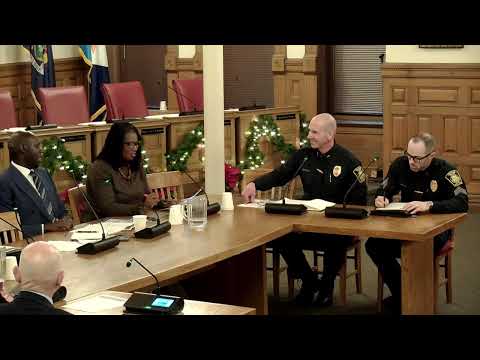
Syracuse police describe PAL’s reach, funding needs and plans for expansion
Loading...
Summary
Jimmy Oliver, director of community engagement and director of PAL, told the Syracuse City Public Safety Committee the Police Athletic League has served an unduplicated 8,900 youth since 2021 (about 2,300–2,400 annually), is tracking participants with city software and is pursuing $450,000 in phase-two funding while seeking a permanent facility.
Jimmy Oliver, director of community engagement for the Syracuse Police Department and director of the Police Athletic League (PAL), told the Syracuse City Public Safety Committee the city-run program has reached tens of thousands of participant-events since its 2021 launch but that the unduplicated head count is 8,900.
"Start small," Oliver said, recounting advice from older PAL programs when Syracuse planned its camps and leagues; the program began with four one-day camps in summer 2021 and has grown to include sports, arts, STEM and literacy programming in partnership with Nottingham High School, Syracuse University and local community organizations.
Oliver said PAL uses a city software tool and QR-code intake so staff can track where participants go to school, ZIP codes and prior PAL involvement. He provided an age breakdown of regular participants: 5–7 (11%), 8–10 (37%), 11–13 (36%) and 14–16 (15%). He also said the program’s aggregate tally is commonly reported as "10,000 kids have been through the PAL program," but clarified the unduplicated total is 8,900, which he estimated equates to roughly 2,300–2,400 unique youth per year.
Committee members and PAL supporters described program highlights — swimming and lifeguard training, a late-night March Madness basketball program, a literacy league with Syracuse University students and an awards ceremony — that PAL leaders said create repeated, relationship-building encounters between officers and young people. Oliver noted a book-distribution effort using Derek Dodson’s The Policing Me and said PAL purchased roughly 1,500 copies to support classroom readings.
Members praised PAL and suggested expanding partner engagement. One commenter proposed adding city fire personnel to create a combined police–fire PAL to deepen first-responder connections and broaden potential funding. Oliver said the idea was worth exploring and that fire collaboration has been discussed informally.
On facilities and staff, Oliver told the committee PAL lacks a permanent building and estimated a neutral, citywide facility could cost about $4,000,000. He said short-term staffing needs to sustain current operations would be about 12–15 people, while a full facility would require roughly 20–25 staff, plus roles for grants management and communications.
Oliver outlined current funding sources: an initial ARPA allocation used for infrastructure and marketing (described as roughly $300,000) and a separate $450,000 grant targeted at older youth (described as supporting ages 14–18 for a multi-year phase). He said that while grants can be cyclical, PAL is also pursuing longer-term donor support.
Committee members asked for follow-up data, including separate counts for direct programs (multi-week participation) versus one-off events, and a schedule of seasonal activities so neighborhood councils can help publicize offerings. Oliver agreed to provide the requested schedules and additional breakdowns.
The committee did not take formal action at the end of the presentation; members thanked presenters and scheduled follow-up for data and partnership discussions.