Syracuse proposal would create pyrotechnics permit category, raise fees to cover fire-department staffing
Loading...
Summary
Officials proposed an amendment to Syracuse ordinances to create a pyrotechnics category, align local rules with state and NFPA safety standards, and replace a $25-per-event charge with a three-tier fee schedule intended to recover overtime and standby costs; councilors pressed officials on community impact and enforcement details.
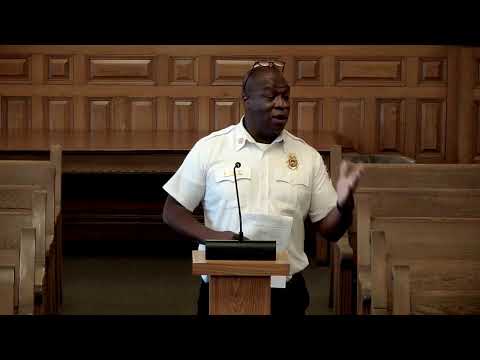
Syracuse City officials on the council’s agenda outlined a proposed amendment to Chapter 5 of the revised general ordinances that would create a new category for pyrotechnics, fireworks and flame-effect displays and set a three-tier fee schedule to recover staffing costs.
The amendment, presented by fire department representatives, aims to align local permit standards with the New York State Fire Code and National Fire Protection Association (NFPA) standards and to charge event organizers for documented permit reviews, safety-plan approvals and on-site standby coverage that the department now pays from its budget.
The fire department representative said the city currently charges $25 per pyrotechnic event but is not recouping its costs. “We annually only recoup 8% of what it costs for us to staff these events,” the presenter said, citing department overtime and permit data. The presenter gave detailed figures: in 2023 the department recorded 208 overtime hours for pyrotechnic events costing about $13,500 and issued 44 permits; in 2024 it recorded 293 overtime hours costing about $21,000 and issued 66 permits.
To address that shortfall, the department proposed three situations and corresponding fees: a $75 fee for low-risk, setup-only events (for example, cold-sparkler displays at private weddings), a $300 fee for indoor or outdoor major pyrotechnic events that includes permit review and up to four hours of a certified staff member on standby, and a third, invoice-based approach when events require extended standby or additional personnel beyond the included hours. The presenter said the $300 figure reflects the approximate 4‑hour overtime cost for a single staffer (roughly $299.12) and pointed to comparable fees in nearby municipalities.
Executive Deputy Chief Elton Davis described specific venue risks that shape the department’s approach. On indoor theater pyrotechnics, he said, “in the fire code, you’re not allowed to have open flame inside a theater,” and noted that the Landmark Theater’s historic interior lacks fire-detection and notification systems, increasing potential occupant risk. For venues with insufficient detection, Davis said the department would require a pyrotechnic permit and staff on site to ensure permitting, clearances and occupant notification are in place.
Councilors pressed for more context on economic and equity impacts. One councilor noted that large events such as Syracuse Mets games draw thousands and questioned whether a higher fee would deter community events or merely shift costs into the general fund. The presenter acknowledged the city’s general-revenue accounting but said the intent is cost-recovery, not profit: the proposed fees would create a separate revenue bucket so overtime currently paid from life-safety budgets would be reimbursed.
Council members also asked how cancellations and existing permits would be handled. Staff replied that permits already in effect were allowed to continue under the $25 fee while the ordinance language was finalized, and that cancellations often result in rescheduled dates rather than forfeited fees. The presenter said any upfront $300 payment would be billed at application for major events and any hours beyond the included standby would be invoiced after the event with an itemized breakdown of staff and hours.
Several councilors urged a broader review of license and permit fees citywide to ensure equity for community groups and marginal venues; staff responded that fees could be applied with situational discretion and that the proposed structure is meant to be flexible to account for low-risk community events.
No formal vote on the ordinance amendment was recorded in the transcript. The meeting concluded after a brief wrap-up, and the council adjourned.