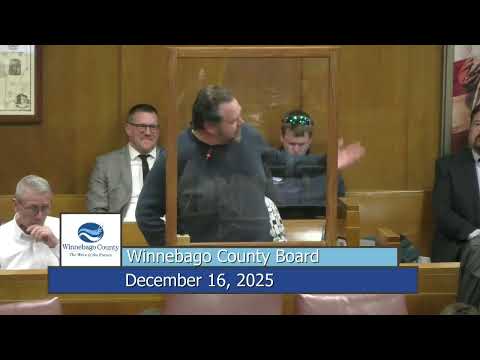
Winnebago County Board OKs $3.5 million to seed revolving housing loan program after hours of debate
Loading...
Summary
The Winnebago County Board voted 27–5 to authorize up to $3.5 million from the Spirit Fund for a revolving loan program intended to spur affordable housing; the measure authorizes a procurement process and added an annual performance review and board ratification before any funds are disbursed.
The Winnebago County Board of Supervisors voted 27–5 on Dec. 16 to authorize $3,500,000 from the county’s Spirit Fund to finance a revolving loan program to expedite housing development in the county.
The resolution, as amended, directs county staff to solicit bids for a nonprofit or other managing entity to administer the program and requires that any awarding of funds be ratified by the county board after review by the ARPA commission, the Industrial Development Board (IDB), and the Personnel & Finance Committee. The board also added a requirement for an annual performance review of the managing nonprofit; if solvency or program metrics are not demonstrated the board may rescind funding.
The measure does not authorize any immediate transfers of money. County Executive (speaker 4) told the board approval would permit the county to solicit proposals and clarified that final approval of any awards and contracts would return to the board: “Approving tonight’s resolution does not authorize any money to leave the county coffers,” he said.
Public comment was sharply divided. Matt Woods warned the board it was “risky” to commit taxpayer dollars when municipalities already have access to long‑standing financing through the Board of Commissioners of Public Lands and cited a $250,000 administrative cost discussed at an ARPA meeting. John Damel and other residents urged the board to use the funds to spur housing and trusted the IDB to oversee the program.
Debate among supervisors focused on risk, oversight and whether projects that use Tax Increment Districts (TIDs) should be eligible. Vice Chair Farid proposed restoring language to bar use of the revolving loan where a project would also use a TID; that amendment failed in committee and again on the floor. Supporters of keeping TID‑eligible projects said coupling incentives can attract developers and finance infrastructure like roads and utilities.
The board approved several other amendments during debate, including language to prioritize projects where the revolving fund would be the primary lienholder in certain equity‑incorporated mixed‑income projects (that amendment failed), and an addition requiring annual program performance reviews. Several board members said the final structure includes safeguards: the administering nonprofit would be selected by competitive procurement, the county board would ratify awards, and the program could be ended if metrics or solvency are not met.
County Executive (speaker 4) and supervisors acknowledged the size of the award is modest compared with statewide housing needs and stressed the county will seek matching funds to amplify the $3.5 million. “It’d be nice to see us get some matching funds,” the executive said, noting comparable programs in other Wisconsin counties.
Next steps: staff will publish an RFP for an administrator, responses will be reviewed by staff and the specified committees, and any recommended award will be returned to the county board for ratification. The board’s vote authorized the procurement and policy framework, not the disbursement of program dollars.