Riley County police report arrests in Manhattan homicide and warn of overtime costs tied to major cases
Loading...
Summary
Police reported arrests in a Manhattan homicide and related cases, said some investigative and medical costs were assumed by state partners, and warned the county may see higher overtime expenses tied to major investigations; the department also outlined plans for homelessness outreach and interagency technology sharing.
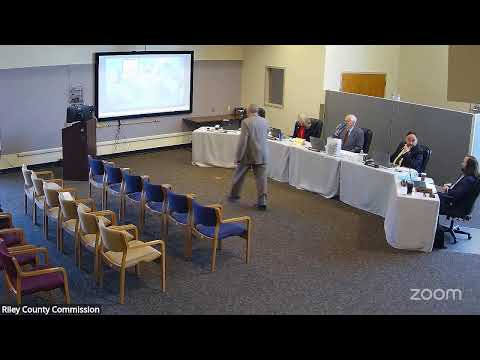
RILEY COUNTY — The Riley County Police Department updated commissioners Dec. 18 on recent major investigations and operational impacts, including arrests connected to a Manhattan homicide and a warning that significant cases can raise overtime costs.
Brian Pete of the Riley County Police Department said investigators made arrests in the Manhattan homicide and in an aggravated robbery; one suspect was located in a Topeka homeless encampment and returned to Riley County on a $1,000,000 bond. Pete said some medical and investigative expenses shifted to state entities but that the county still faces overtime and other operational costs connected with major investigations. He estimated the typical overtime hit for significant crimes at roughly $20,000 and said the current incident will be higher.
Pete described work the department is doing on homelessness outreach, including reviewing ordinance options (nuisance/property ordinances) and reaching out to local businesses and individuals to identify behaviors that warrant policy response. He also said the department is pursuing interagency data and camera sharing with the City of Manhattan and Kansas State University to improve investigative capabilities.
The department also noted ongoing planning to define which public events will require overtime deployment and to shift certain event costs away from county government if events have no government nexus. Commissioners and staff discussed venue options and timing for law board meetings and other coordination steps with city partners.