Get Full Government Meeting Transcripts, Videos, & Alerts Forever!
Get email alerts on the Traffic Enforcement topic
No spam. Unsubscribe anytime.
Seat Pleasant council adopts speed-monitoring ordinance, sets new civil penalties and scofflaw fee
Summary
The Seat Pleasant City Council on Dec. 8 adopted Ordinance O‑26‑09 to authorize automated speed monitoring, set graduated civil penalties from $40 to $425 for increasing speed tiers and create a scofflaw fee of up to $1,000 for delinquent violators; councilors asked staff to emphasize public education.
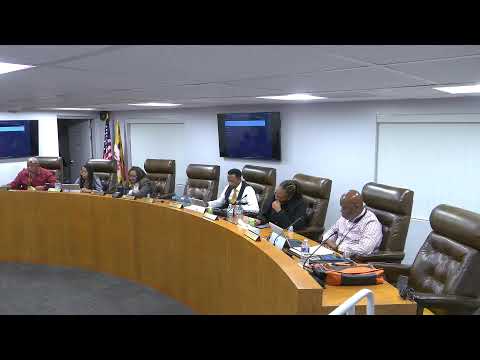
The Seat Pleasant City Council voted Dec. 8 to adopt Ordinance O‑26‑09, amending chapter 150 of the city code to permit speed‑monitoring enforcement and to set civil penalties tied to the amount a driver exceeds posted speed limits. The measure passed on an online vote, 4–1.
At a second reading, a city staff member recited the civil penalties the ordinance prescribes: $40 for 12–15 miles per hour over the limit; $70 for 16–19 mph over; $120 for 20–29 mph; $230 for 30–39 mph; and $425 for 40 mph or more over the posted limit. The ordinance also establishes a scofflaw fee, not to exceed $1,000, to be assessed when a violator has one or more delinquent violations after reasonable notice and an opportunity to pay.
"The driver of a motor vehicle is subject to a civil penalty in the amount of $40 if the motor vehicle is recorded by speed monitoring system while being operated in a school zone and residential zone in excess of the posted speed limit," a city staff member read for the record.
Council members discussed whether the city’s penalties aligned with state law. One member asked if the ordinance "is matching the minimum, above the minimum, and in what areas?" The presiding official said the fines as written mirror Maryland state fines to maintain consistency across jurisdictions.
Several council members urged that any new enforcement be accompanied by public outreach. The presiding official said, "I hope that our police department does to the best of their ability to educate the public on the new laws... I understand it makes sense to mirror what the state is doing so there can be some consistency. But I hope that we do enough to educate folks so people can slow down, and don't feel like they're just being trapped and fined." The council did not attach an implementation timeline in the ordinance itself.
After adoption, one member moved to reconsider their earlier vote to do additional due diligence on administrative fees; the clerk recorded a change in that member’s vote but stated the measure nonetheless passed. The council did not record a roll‑call of individual yes/no votes in the public transcript; the clerk reported the outcome as passing on the recorded tally.
The ordinance adds enforcement tools the city can use in school and residential zones and allows the city to recover costs associated with delinquent accounts via the scofflaw provision. City staff said they will handle the operational details and notification procedures during implementation.
What happens next: The ordinance was adopted at second reading and will become effective as provided in the code; council members asked staff to prioritize community education about the new fines and enforcement process.