Get Full Government Meeting Transcripts, Videos, & Alerts Forever!
Get email alerts on the Term Limits topic
No spam. Unsubscribe anytime.
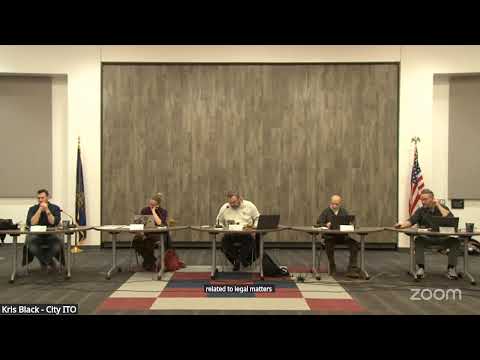
Williamsport council adopts term-limits ordinance; president votes no over 'grandfather' language
Summary
After extended debate about a clause allowing some current officeholders to run for an extra term, Williamsport City Council adopted a term-limits ordinance on Dec. 4, 2025, by a 4-1 vote; President Yoder voted no and asked the record note his objections.
Williamsport City Council approved a city ordinance establishing term limits for elected offices in a 4-1 vote on Dec. 4, 2025. The ordinance sets a two-term (eight-year) limit for the mayor and three-term (12-year) limits for city council seats and the offices of treasurer and controller.
President Yoder acknowledged the value of the reform but opposed a provision he described as a "grandfather" clause that would let some currently seated officials run beyond the new limits. He said the clause "creates unequal application" and said the record should reflect his concern that the language could invite legal challenges even though the reform is otherwise sound. "This is gonna pass tonight. It's a good thing for Williamsport," Yoder said, "but I think that institutional record needs to show that equal application mattered enough to at least be brought forward." (President Yoder, speaking at the second reading.)
Supporters framed the measure as a governance reform intended to reduce entrenchment and encourage rotation in office. Proponents said term limits will promote fresh perspectives while preserving the ability for experienced officials to return after a break; the ordinance explicitly allows nonconsecutive service in some circumstances.
The council completed the second reading and took a roll call vote; the ordinance passed 4-1, with President Yoder recorded as the lone no vote. The ordinance will be codified as amended and its effective date will be determined by the clerk’s office and public posting procedures.
Why it matters: Council members cited past governance failures and a need for clearer checks and rotation in elected office as reasons to move the reform forward. The debate over the grandfathering language indicates there may be follow-up discussion or potential legal review if challenges arise.