
Lyon County schools receive clean audit; district cites significant deficiency in student activity reconciliations, creates bookkeeper position
Get AI-powered insights, summaries, and transcripts
Subscribe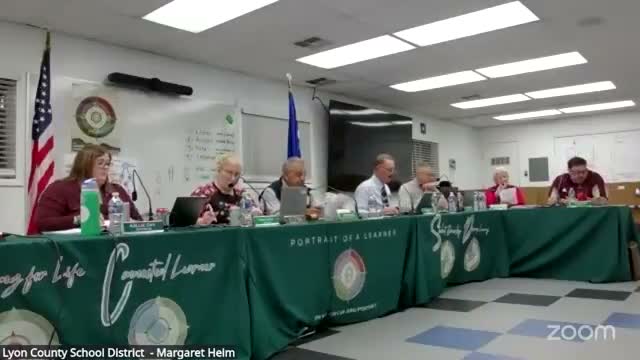
Summary
The Lyon County School District received a clean FY25 audit but one significant deficiency related to inconsistent school-level student activity fund reconciliations. The board approved creating a district business bookkeeper to support sites (6–1).
The Lyon County School District on Dec. 12 accepted its fiscal year 2025 certified audit, which carried an unmodified (clean) opinion from Silva, Sharani & Associates but identified one significant deficiency related to student activity fund reconciliations.
Chief financial officer Liliana Camacho Poco told trustees the audit showed the district ended FY25 with an approximately $1,050,000 higher general‑fund balance than originally budgeted and that the audit was completed “timely and on time” in accordance with NRS 354.624. The report found several schools had not performed required monthly bank reconciliations for student activity accounts, and some sites did so inconsistently or not at all.
“The audit identified a significant deficiency related to student activity funds,” Camacho Poco said, and the district has already consolidated school accounts under a Wells Fargo structure to improve oversight. She said training has been provided to principal secretaries and the district is evaluating hiring a bookkeeper to prepare and review monthly reconciliations.
Executive Director of Operations Harmon Banes told the board the consolidation gives the district visibility into transactions but does not transfer ownership: “These funds are staying at the schools in their entirety,” Banes said, adding that the district is not using school funds and the accounts are meant for class‑ and club‑level purposes.
Trustees pressed for detail on how student activity funds are generated (ticket sales, concessions, yearbook and fundraiser revenue) and voiced varying degrees of concern about past lack of oversight. “There is a lot of danger in that,” Trustee Boldt said, praising the district’s move to centralize oversight to reduce fraud risk.
After extended discussion about scope of the proposed role and site responsibilities, the board voted 6–1 to add a business bookkeeper position in the district office to support school site reconciliations, provide training and serve as a point of contact. Trustee Parsons cast the lone dissent, voicing concern that centralizing tasks could remove learning opportunities from students and that the proposal expanded principals’ secretaries’ scope of duties.
The board also unanimously approved the audit itself; trustees said the clean opinion was positive while emphasizing the need to resolve the finding and strengthen internal controls.
The district’s written response to the audit states training is planned to reinforce reconciliation expectations and that the district will evaluate assigning a dedicated bookkeeper to ensure monthly reconciliations are completed accurately.
What happens next: the district will proceed with hiring and training plans intended to address the student activity fund deficiency and report back to the board on implementation progress.