Get Full Government Meeting Transcripts, Videos, & Alerts Forever!
Get email alerts on the Zoning Parking Minimums topic
No spam. Unsubscribe anytime.
Boston council hearing explores removing parking minimums as tool to cut housing costs
Summary
At a Dec. 9 hearing (docket 0161), Boston City Councilors, planning staff, regional planners and dozens of residents debated whether eliminating off‑street parking minimums would reduce development costs and speed housing production while protecting neighborhood parking. The committee will continue the matter next year.
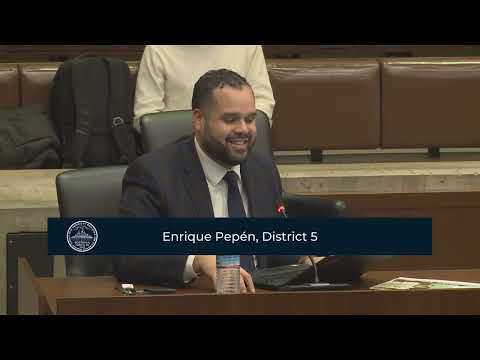
Boston City Councilors and city planning officials on Dec. 9 opened a broad public discussion about a proposal to remove off‑street parking minimums from the Boston Zoning Code, arguing the change could reduce construction costs and speed housing production while opponents warned of neighborhood parking spillover and urged safeguards.
Chair Sharon Durkin opened the hearing by calling the city’s housing shortage the most pressing problem and framing the docket as a targeted tool to lower costs. "Boston has a housing crisis, not a parking crisis," she said, stressing that eliminating minimums "does not ban or eliminate parking" but removes a regulatory veto point that can make projects infeasible.
Supporters, including developers, regional planners and housing advocates, told the committee minimum parking rules raise costs and are often out of step with actual demand. The Metropolitan Area Planning Council (MAPC) summarized its Perfect Fit Parking study, finding average supply at surveyed multifamily sites exceeded demand and citywide utilization averaged about 69 percent. Daniel Harriges of the Parking Reform Network and advocates from Abundant Housing Massachusetts pointed to national examples — including Cambridge, Somerville, Minneapolis and Austin — where changes broadened development options and, over time, increased housing types without wholesale elimination of parking on the ground.
Developers and lenders also weighed in. Peter Speleos of Transom Real Estate and a principal from Samuels Associates said requiring more parking can make many small and mid‑scale projects financially infeasible; developers reported per‑space construction costs ranging from roughly $50,000 for above‑grade stalls to much higher figures for below‑grade parking.
Several councilors pressed staff on neighborhood impacts, legal risk and implementation details. Vice chair John Fitzgerald and councilors representing outer neighborhoods said residents in areas with limited transit rely on cars and urged safeguards so new development does not push cars onto already crowded streets. Councilor Ed Flynn described constituent worries in Chinatown and South Boston: "Please keep the parking in the building so I'm not driving around 45 minutes for a spot," he said. Planning staff replied that large projects already bypass minimums through the Article 80 review and that roughly one‑third of CVA (variance) cases reference parking, which often generates litigation and delays.
Panelists and public speakers offered a range of design and policy options to manage neighborhood effects: phased or neighborhood‑by‑neighborhood rollouts, lowering—rather than eliminating—minimums in specific zones, tighter zoning language so the built form is predictable, stronger curb and parking management (meters, permit reform, pricing), and unbundling parking from housing costs so tenants who do not use a space do not pay for it.
Public testimony was lengthy and mixed but leaned toward reform. Residents, small landlords and nonprofit developers described projects enabled when parking was not required, and community groups cited polling and regional research showing broad support for flexibility. Other residents and several councilors urged caution, calling for equity analyses and safeguards for neighborhoods with poor transit service.
The hearing produced no vote or ordinance; Durkin said the item is a hearing order to gather evidence and public comment and that the committee will revisit proposals in the new year. She asked staff to return with more neighborhood‑level data and recommended comparative visualizations that more clearly explain likely, measurable outcomes of reform.
What happens next: the committee remains in session, staff will provide additional data (including neighborhood‑level utilization tables from MAPC), and the council may consider zoning language options in the next legislative cycle.
Sources: oral testimony and documents presented at the Boston City Council Committee on Planning, Development and Transportation hearing on Dec. 9 (docket 0161).