Get Full Government Meeting Transcripts, Videos, & Alerts Forever!
Get email alerts on the Zoning Variances topic
No spam. Unsubscribe anytime.
Planning board reviews multiple rezoning and variance requests, debates easement and frontage rules
Summary
The board reviewed several rezoning and variance applications — including requests from Brooke and Samuel Francis, Darlene and Nolan Plattkin, Marcus and Deborah Veil, and Kyle Wood (for Beverly Blayman/Gleeman) — focusing discussion on easements, road frontage calculations and when a split triggers a major subdivision review.
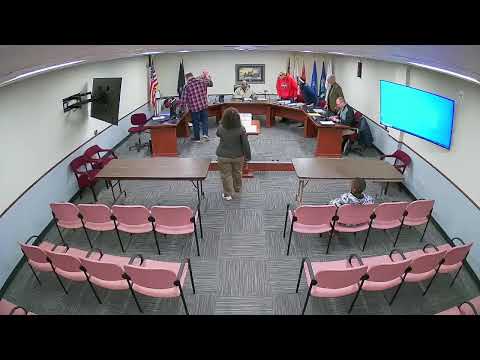
Madison County’s Planning and Zoning Board reviewed a batch of rezoning and variance requests and spent substantial time clarifying how private-access easements and road frontage rules apply to proposed lot splits.
Staff presented multiple applications slated for the upcoming public period. Brooke and Samuel Francis requested a rezoning to allow a mortgage split on a portion of their 27.33‑acre parcel in Comer. Darlene and Nolan Plattkin sought a variance to allow a split that would leave one resulting lot with 128.52 feet of frontage where 150 feet is required; staff said an access easement would serve a landlocked tract. Marcus and Deborah Veil requested rezoning of 16.08 acres to create two tracts served by a 60-foot easement that narrows to 30 feet at the end. Kyle Wood appeared for an application on behalf of a property owner (identified in the packet variously as Beverly Blayman and later as Beverly Gleeman) seeking rezoning to create multiple tracts, including a 9.9‑acre tract that staff warned could be further subdivided under AR rules unless a condition is added to prevent future splits.
Board members focused on regulatory interpretation: whether a private access easement counts toward road frontage calculations, and whether a lot that borders a public road should be counted among the lots 'served' by an easement for the purpose of the four-lot maximum under the private drive rule. Staff cited subdivision regulation language limiting private drives/easements to serving a maximum of four lots and noted the importance of how 'service' is defined. One member summarized the practical test: if the easement and existing road frontage together provide access, they may be treated as serving the lot; interpretations can vary and sometimes require further review.
Several board members warned that simply rezoning to AR without conditions could leave property owners free to subdivide in the future. Staff advised that limiting future subdivisions of a parcel (for example, preventing the 9.9‑acre track from further dividing) would require an explicit condition in the board’s motion.
For the Plattkin variance, members discussed whether including the easement width would satisfy the 150‑foot frontage requirement; staff said the approach depends on interpretation of the code and how the easement is used to provide access. On minor vs. major subdivision thresholds, staff said the rule creating five or more lots within a three‑year rolling period is applied across parent parcels in practice to prevent circumvention of the major‑subdivision process.
No final county commission decisions were recorded in the transcript for these items during the meeting; several items were left with staff to prepare motions or conditions for subsequent consideration or public hearing. One practical instruction repeated by staff: if board members want to limit future subdivision rights they must include explicit conditions in the motion.
Next steps: staff will prepare motions and recommended conditions where requested; affected items will appear on future agendas and the December public period as indicated in the packet.