
Parents question preschool expansion and use of state PEA funds as district defends inclusion goals
Get AI-powered insights, summaries, and transcripts
Subscribe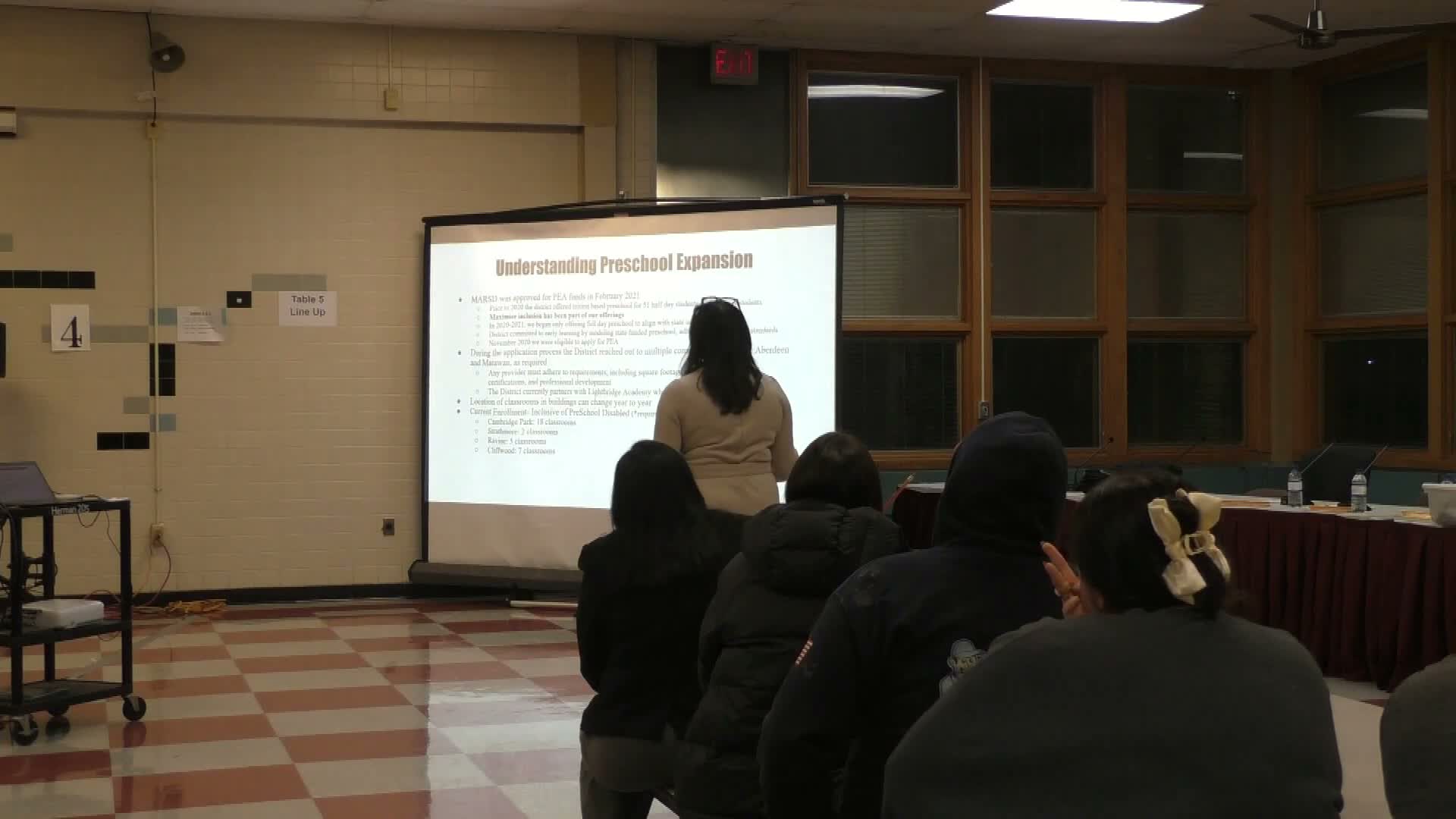
Summary
District officials recounted approval for Preschool Expansion Aid (PEA) in 2021 and said the funding supports early learning, transportation and some district costs; parents asked whether accepting PEA and placing pre‑K classrooms reduces space and services for K–5 students.
District leaders told attendees that Matawan‑Aberdeen received Preschool Expansion Aid (PEA) funding beginning with a February 2021 approval and rolled out full‑day preschool to align with state models and inclusion goals. "We were approved for PEA preschool expansion aid funds in, February 2021," Superintendent Perez said while describing state application requirements and facility standards.
Administrators said preschool expansion was intended to support early literacy, school readiness and long‑term outcomes and that the PEA funds have helped buy buses, playground equipment, transportation and other supports they said benefit multiple buildings. The district also noted that PEA eligibility imposes state conditions (square footage, staffing certifications, annual on‑site reviews and, in some cases, lottery procedures) and that some community providers did not meet those standards when the district applied.
Several parents objected that the additional pre‑K classrooms in existing buildings reduce space for K–5 functions such as intervention, art and music. One commenter pointed to the district’s K–3 program changes and loss of an interventionist model in some schools and asked whether preschool expansion was drawing resources away from K–5 supports. District administrators responded that pre‑K enrollment "does not contribute to overcrowding" in the way parents described and argued that the PEA funding has offset other costs and supported K–12 programming as well.
The district also described current and proposed state pilot adjustments — including a reported 60/40 local/state funding split under consideration for future years — and said it intends to preserve eligibility where feasible to maintain funding that administrators say supports district programming. Parents asked for follow‑up data and scenario maps showing where preschool classrooms are located and how redistricting scenarios would affect K–5 room inventories; staff said those details will be available with the scenario releases.