Lifetime Citizen Portal Access — AI Briefings, Alerts & Unlimited Follows
Canyons School District unveils Innovation Center to link high school students with industry
Loading...
Summary
Canyons School District leaders describe the Canyons Innovation Center in Draper as a profession‑based learning hub that will pair students with industry projects, college credit and certifications to address workforce gaps in aerospace, defense, manufacturing and tech.
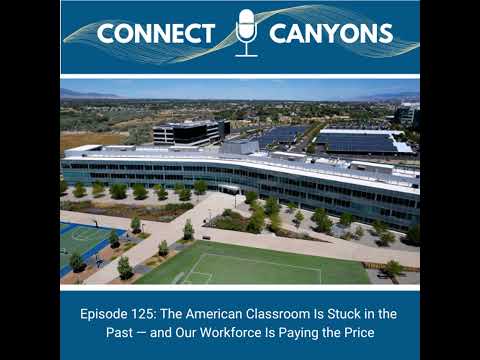
Canyons School District officials and industry partners used a Connect Canyons podcast to outline plans for the Canyons Innovation Center, a profession‑based learning hub opening in the former eBay regional headquarters in Draper that district leaders say will connect high‑school students directly with employers in aerospace, defense, manufacturing and technology.
"It's kind of an R and D inspired environment...where students learn directly from industry professionals, earn college credit, earn industry certifications," said host Kirsten Stewart introducing the center. Dr. Rick Robbins, Canyons School District superintendent, said the center is intended to reimagine schooling so students leave with "durable skills" — leadership, collaboration and career readiness — as well as academic credentials.
Aaron Stark, CEO and president of 47 g, described industry's role in recruiting and mentoring students and urged companies to engage earlier. "If you wanna grow any industry, the input is always, human capital," Stark said, arguing that firms should host site visits, short internships and speaker events to build students' confidence and workplace exposure.
Reid Newey, director of the Innovation Center, said the center's Draper location is strategically placed near Salt Lake Community College, University of Utah, UVU and BYU and will draw participation from higher‑education partners and industry advisory groups. He described a model where companies present real projects to students, who then develop solutions, build portfolios and earn credentials that align with skills‑based hiring trends.
Guests listed specific programs planned for the center, including welding, heavy diesel, manufacturing, cosmetology and cybersecurity, and described how those trades will be combined with entrepreneurship, media production and prototyping so students can take projects from idea to market. Newey said vocational programs that currently have waiting lists will be able to expand capacity through the center.
Speakers framed the center as both an economic and national‑security asset: Stark emphasized the growth of aerospace and defense in Utah and urged students toward high‑skilled careers; he characterized the moment as one of rapid acceleration in technologies that have both commercial and defense applications. Those claims were presented as speaker assertions during the conversation and were not independently verified by the podcast.
The district and partners outlined next steps including industry speaker series, short company internships or externships, and stronger alumni engagement to support graduates who pursue entrepreneurship. There were no formal votes or board actions reported on the episode; speakers encouraged students to visit the center and participate as it opens.
"Come out and take a tour, get excited about what's there and what your future might look like," Dr. Robbins said. The episode closed with contact information for the district and links to Canyons School District social media and website for updates.