Get Full Government Meeting Transcripts, Videos, & Alerts Forever!
Get email alerts on the Education Choice topic
No spam. Unsubscribe anytime.
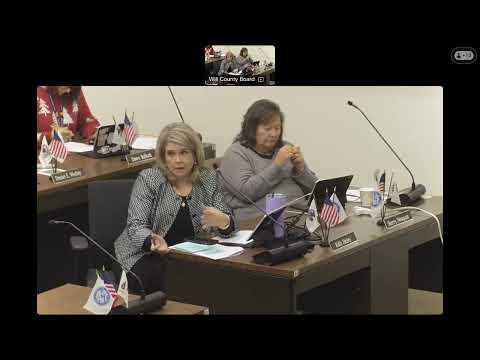
Will County executive committee declines to place Educational Choice advisory referendum on ballot
Summary
After a lengthy presentation from an Illinois Policy Institute advocate and extended committee questions about how the federal scholarship tax‑credit would work locally, the executive committee voted against placing an advisory Educational Choice (FSTC/ECCA) referendum on the primary ballot.
Jess Plowman, an Illinois Policy Institute staffer who identified herself as a Will County resident, asked the committee to place an advisory referendum on the county primary ballot so voters could signal support for the federal scholarship tax‑credit program and encourage local Scholarship Granting Organizations (SGOs) to form and apply. "By opting into this program, students who need extra support in school will have access to the same resources regardless of their family's financial backgrounds," Plowman said during her presentation.
Committee members pressed on the mechanics and likely local effects. Member Hickey questioned whether the governor, the legislature or the U.S. Treasury Department would ultimately decide how states opt in, noting there are pending bills in Springfield and that Treasury rulemaking remains unsettled. Plowman said Treasury guidance could make governors the decisive authority and that the referendum is a way for local voters to communicate directly to state leadership.
Members also probed how donations would flow and who would be eligible to receive and distribute funds. Plowman explained that participating donors would give to SGOs — nonprofit scholarship organizations — which may retain a capped administrative percentage and then distribute scholarships. She said the program is structured so SGOs must distribute at least 90% of donations as scholarships and that any 501(c)(3) could file for SGO status under federal rules.
Several members raised equity and transparency concerns. Member Newquist and others asked how much of Illinois' federal tax contribution would be returned to the state and how SGOs would be selected or approved. Member Hickey, Member Williams and others said they wanted more detailed guidance on SGO criteria, whether scholarships could be used for homeschool or preschool instruction, and whether the program might divert support from public schools. Plowman and other supporters argued that allowing public school foundations to seek SGO status could channel more dollars back to local students.
After debate, Member Butler moved to place a non‑binding advisory question on the full county board agenda; the committee took a roll call vote and the motion failed on the executive committee floor.