Get Full Government Meeting Transcripts, Videos, & Alerts Forever!
Get email alerts on the Local Budget Levy topic
No spam. Unsubscribe anytime.
Marshall Public Schools board approves 2025 (payable 2026) levy after budget presentation; public raises equity concerns
Summary
After a Truth in Taxation presentation by Director of Finance Sarah Kirschner outlining a projected FY2026 shortfall and declining per-pupil funding, the Marshall Public Schools board approved the 2025 (payable 2026) levy. Public commenters urged equitable distribution of cuts and questioned administrative benefits.
The Marshall Public Schools board voted to approve the district's 2025 levy (payable 2026) after a Truth in Taxation presentation outlining a projected fund-balance decline and structural funding pressures. Director of Finance Sarah Kirschner presented audited results and FY2026 projections and explained why the levy must be certified now under state levy rules.
Kirschner said the district is operating with a planned deficit for FY2026 and noted a gap between general education funding and inflation that she quantified as about $14.70 per pupil, which she said equates to roughly $3.5 million across the district. She showed the district's fund-balance trajectory—$11,100,000 at the end of fiscal 2025 down to a projected $9,200,000 for fiscal 2026—and flagged the district's new self-insured health fund as being in deficit after insurance-premium increases of about 22%.
"We have a deficit budget plan for fiscal year 2026," Kirschner said during the presentation, describing how levy timing and state formulas affect the district's budget cycle. She said the levy funding amounts are largely set by state statute and that the board had certified a preliminary maximum levy in September.
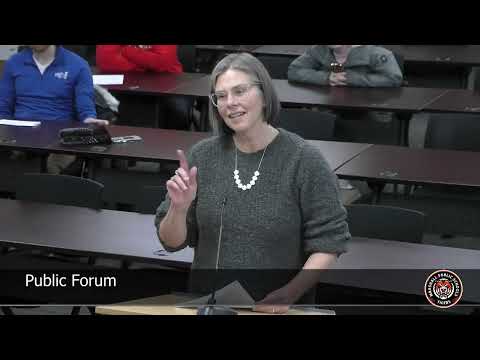
Members of the public used the meeting's public forum to press the board on how cuts would be distributed. Anne Marie Vorbach, a resident and former board member, urged the board to follow the district's equity commitments adopted in 2022 and asked that cuts protect students and student-facing staff.
"There is a perception in this community that those in [administrative] positions are not bearing the same burden of cost cutting that is being placed on students and teachers," Vorbach said, urging equitable treatment across departments.
Zach Halpik, a local business owner and Say Yes Tigers committee member, described two recurring voter concerns: fully funded healthcare for some administrative positions versus larger premium shares for teachers, and a perceived expansion of central office staffing after a departure in the district office. Halpik said he had reviewed the master contract on the district website and suggested revisiting benefit contributions in the next negotiation cycle.
"Principals and district office staff receive 100% or close to healthcare coverage," Halpik said, adding that teachers have had rising premium shares. He also told trustees community members questioned the necessity of some district-office roles.
Following Kirschner's presentation, the board moved and seconded a motion to approve the levy (motion by Jeff; second recorded as Sarah Runti). The chair called for a vote and announced the levy was approved; the transcript records approval but does not list a roll-call tally.
The presentation showed the district expects levy funding to account for roughly 17% of the total budget, with the current levy increase presented as 0.5%, about a $40,000 change on an approximately $8 million levy. Kirschner also noted community-service levy receipts of about $142,000 for 2026, roughly $100,000 of which she said would go to the City of Marshall for Community Education services.
Board procedural items approved earlier in the meeting included the agenda, a consent agenda and the bills for November 2025; those motions were moved and seconded and recorded as approved with no detailed tallies in the transcript. The board adjourned after approving the levy.
What happens next: The transcript records the board's approval of the levy; it does not list a vote tally or subsequent implementation steps in the meeting. Questions raised by public commenters about healthcare contributions, district office staffing, and the distribution of cuts were not resolved during the session and remain matters for future board deliberation or staff follow-up.